Pages

Pages

Showing posts with label Cholas. Show all posts

Saturday, 27 October 2018

Kumbakonam Trip: Day 1

Stop 7: Darasuram

We came to the stone walls of the UNESCO site, with only the Vimanam visible from inside.
As we parked the van, we saw a long driveway leading in to the front gate of the temple.
We got out, and started walking, and after rounding the corner, stopped at the Nandi opposite the entranceway. A strange one, as it is outside the temple premises. To one side, the enclosure had been fenced off, as the steps there are supposed to produce different tones when tapped, and to preserve them, they have been cordoned off - like the iron pillar at the Qutb complex, Delhi, which was hugged by everyone, because of some myth around it.
After listening to Pradeep Chakravarthy give us the basics about the temple(built by Rajaraja II, in a style different to Rajendra's, fusion of the old building style(Aditya, Parantaka), with a brand new style. with very intricate motifs elaborate construction, wanted it to be the best by far, so vandalised a whole bunch of previously existing Chola temples, and took the best pieces from them-this is visible everywhere, wnhere you can see a difference in colour, and lines running through most structures.)
We entered, and spent the rest of the evening looking around. At certain spots, Pradeep Chakravarthy would stop us, and give us the significance of a certain carving.
While enjoying the art, and the magnificence, I was also looking for inscriptions.
I found some 18th century ones on the floor, but right till the end, never saw any proper Chola. But there they were, right by the entrance.
At one point, Pradeep pointed out to us some jaali work in front of a section of a mandapam skirting the wall. I went closer to have a look, and found a dark segment of temple behind it. In that area was an empty mandapam, except for 2 shivalingams, and a small structure on the floor.
We spent overall, maybe an hour, hour and a half, before the dark clouds started to cover the entire sky. We didn't notice it at the time though.
A few minutes later, it was time to leave. But some people wanted to go to Swamimalai kovil, and not straight back, so I took advantage of the confusion, and went to check out the ruined Rajagopuram at the back.
The Rajagopuram is a small distance away from the main temple, so i jogged there. The base is like any other gopuram. A small room, with a couple of pillars in rows, decorated. At the back, a flight of steps to the next floor. On top of that, instead of the regular triangular structure, or a roof, it opened to sky.
I navigated broken bottle pieces, and weeds, and climbed up the stairs embedded in the walls to the first floor. There, a more or less symmetrical design looked back from the other half. I climbed on.
Now I was at the top of the Rajagopuram, looking at Darasuram. I clicked a few pictures, and felt some water on my hand. Realising what was happening, I quickly clicked some more, of the Gopuram, and climbed back down. Then I ran to Appa, who had been waiting for me, and we both dashed for the bus, as it started to pour.

Location: Airavateswara, Darasuram


Image may contain: dog, sky, grass, tree, plant, outdoor and nature

Image may contain: people sitting and outdoor
The Nandi

Image may contain: one or more people, people standing and outdoor
A pano just inside the temple

Image may contain: outdoor
Ganas dancing. In the various invasions following the downfall of the Cholas, the temple was very badly damaged. Hence the different coloured stone blocks here and there.

Image may contain: outdoor


Image may contain: 1 person, outdoor

No automatic alt text available.
Even the steps are decorated!

Image may contain: outdoor
An 1891 November Thanjavur inscription in the floor

Image may contain: indoor
The highly carved pillars

Image may contain: sky and outdoor
The outside of the temple - the Vimanam

Image may contain: one or more people, people standing and outdoor
A pano from a corner of the temple

Image may contain: sky and outdoor

Image may contain: sky, tree, outdoor and nature
The damaged Rajagopuram in the falling light

Image may contain: outdoor
The inside of the Rajagopuram

Epilogue for the day: We got back to the resort fine. By the time we reached, it had stopped raining. We went back to our rooms, freshened up, went for dinner(some good stuff again, this time in a banquet room), and a little while later, headed back to our rooms. That evening, I had agreed to get up early, and go to the temple in kumbakonam before breakfast. As I got ready to sleep, I started having second thoughts about having to wake up so early, but brushed them aside, and slept.


Monday, 23 April 2018

Travelling to Thillai 5; Thirukadaiyur

Thirukadayur. This is a temple many may be familiar with as it is one which is famous for 60th birthday celebrations. But the history of the temple is also quite visible.
The temple was built by the later Cholas, with their inscriptions prominent all over the outer Prakarams. The Vijaynagar kings have also contributed to the Gopuram, as their inscriptions are visible there. Our visit was a quick in-and-out, so we didn't have time to study the inscriptions in detail, but there are little carvings on the gopurams, that provide interesting details of scens from 500 years ago, and mythology.
The temple,strangely enough, has a pair of Pallava era lions. Correct me if they are Chola era, but the inscriptions on them look like they are from before the 8th century. Were they cannibalised from a nearby temple? Or was this a small Pallava temple expanded by the Cholas?

From here we returned to our resort, where we spent the night.


Location: Thirukadaiyur

From here, we went straight back to our hotel room, in Vaitheeswaran kovil

Travelling to Thillai - 3: Poompuhar

After a quick lunch and rest at the resort, we were on the road again. First stop that afternoon was the Pallavaneswaram dig at Poompuhar, an ASI site, with an in-situ museum.


The feet of the Buddha, with Ashokan brahmi on either side


The museum has a variety of antiquities, from pot shards to Roman coins, to Buddhist relics, with Ashokan Brahmi on them that date to the early Pallava period(pre 5th century CE). Of course, this begs the question, why was there Ashokan Brahmi here in the Chola territory, where they should have been using Vatteluthu, or Southern Brahmi at least? Ashokan Brahmi was used predominantly in North India. This indicates that there was probably a lot of trade between the two, leading to an influx of Buddhists, here especially,  between the 2nd and 5th centuries CE. But I would love to hear any alternate theories, or proof to this theory, if it has been debated.

The site just has the brick base of an ancient Buddhist stupa, with a model, in the museum, and on the ground, of how it may have been at one point.

From here we went down to the beach, where we were disgusted by the poor attempts made to call some garish structures 'heritage', and show them to unsuspecting tourists. Poompuhar was the ancient Chola port between the 2nd century BCE/BC and the 2nd century CE/AD, or what was known as the Sangam period. The port is most famous for the beginning of the Tamil Sangam age epic, Silappadigaram, about the power of a single woman, Kannagi, who has a most uncharacteristically benign statue here.
Kannagi and her husband move to the Pandya capital, Madurai, after Kovalan, the husband has an affair, which ruins them,


We then had a brief photoshoot at the mouth of the Kaveri river, close to the beach, which was still as polluted but less crowded. A fisherman was throwing his net in the mouth of the river, trying to catch some varieties of fish that inhabit the mouth of rivers, where sea and fresh water mix, and while we were there, he caught 2 medium sized fish, which he informed us was a week's income. He was a little happy about this, and continued to throw out his net even after we left, and the sun started sinking.


From here, our destination was Tranquebar.
Location: Poompuhar


Travelling to Thillai -2 : Veeranam lake

After our stop at Sendhamangalam, we drove down all the way to Veeranam lake. this lake, about 10km long, was said to have been constructed by Paranthaka I, great-grandfather to Rajaraja I, by his army, after they had desolated the lands of the Sambuvarayars, who were the Chieftains who ruled that area, as compensation.
The lake, now full after the monsoon, is mostly dry, spanning a length of around 16 km, and is around 4, 41/2 km at its widest points. The novel Ponniyin Selvan starts on its banks, with the protagonist Vandiyathevan observing people taking a dip in its waters during a festival, as he journeys to the Sambuvarayar fort.
The lake now provides drinking water to many cities, including our own Chennai.


A canal that feeds the lake

The viewing point

Travelling to Thillai - 1: Senthamangalam

Chidambaram. The abode of the Nataraja. THE temple in Shaivism. The gold plated temple.
Every one must have heard of Chidambaram in some form or another. We undertook a trip there, over the Republic day weekend, and boy was it fascinating! Not only did we go to Chidambaram(known also as Thillai), but also to Gangaikkonda Cholapuram. Veeranam lake, Senthamangalam, Poompuhar, Tranquebar, Thirukadaiyur, and Cuddalore.


On a cold chilly morning, six people were assembled in a van, waiting for three more to join them. They were going for a heritage trip, and were rearing to go. Soon, the other three joined them, and they picked up on more person on the way, before hitting the highway, and heading to breakfast.
On the way of course, as was the nature of the group, the topics discussed were this that and the other, ranging from the most mundane to the bonkiest bizzare.

Soon we reached our breakfast destination, and our breakfast was ordered, and eaten in record time. Bills duly paid and water bought, we got back into the van, and headed to our first stop, Senthamangalam.
Senthamangalam was the capital of the Kadavarayars, a clan that began as minor chieftains of a village in the reign of Kulothunga Chola II, with  Kopperunjinga's grandfather, who gained prominence in the Chola court, at a time when the king's power was starting to fade. His son fought in Rajaraja II's campaigns, and his grandson, who was born into a very prosperous line of local rulers, found himself ruling an area in South Thondaimandalam, with his capital at Senthamangalam.
1204-05, the Pandya Maravarman Sundara Pandiyan captured Thanjavur, and invited Kulothunga III to rule as a subservient ruler. Kulothunga dies soon after, and his successor Rajaraja III comes to power, over a stretch of kingdom contained to the Chola's heartland in 1216 AD

Rajaraja III wants to regain the old extents of the empire, at least upto Nellore and Kanchi, his predecessors Northern limits, with most of the peninsula, except for the Cheras observing subserviency.
Alas for him, his first folly was sending an army to defeat the Pandyas. Maravarman soundly defeated it, and in his haste to escape from Gangaikondacholapuram, and join his ally the Hoysala(with whom the Cholas had marriage ties) he took just a few people with him. This allowed Kopperunjingan to surprise, ambush and take captive the Chola when he passed through his territory. Rajaraja now was confined to Senthamangalam.
The Hoysala ruler Narasimha swept down the country, and realising what had happened to Rajaraja, he started devastating the country. He even went as far as Rameswaram, and defeated Maravarman's successor.
Rajaraja was freed in due time, and Kopperunjingan was allowed to rule on as a vassal, but he was a vassal only in name, just like all the other kings swearing fealty to the Cholas at this point. The Hoysalas now took the stage, mediating between the Pandyas and Cholas, making sure neither got too powerful, and ensuring that both stayed within its control.
By 1279, Rajaraja's successor Rajendra III was dead, and the Chola line came to an end. The pandyas, under Jatavarman Sundara Pandiyan then controlled South India.

Source: Nilankanta Sastri's 'Chola'.

Senthamangalam temple, with some fort walls


Koperunjingan(I and II) inscriptions-the only rulers to have carved here

A partial Telugu inscription


Inscriptions

Mandabam outside

A well with quite a bit of water.
Parts of the fort walls

A horse directly opposite the temple, on the other side of the tank. Fenced off, and overgrown. 
There is a pair of them. 

Location: Senthamangalam

Friday, 22 December 2017

Stop 6: Sengalipuram

" My grandmother's, grandmother's, grandfather was supposed to have been from here", I said, trying to fill in some time. We were at Kodavasal, a small town by the highway, a little way away from our destination. But due to a wrong turn, instead of continuing on the highway, we were stuck in Kodavasal. My statement got a couple of wows, but then, everything went silent again. We were wondering what to do, as a majority of our group was in a larger van at the back, and a smaller one here carried just 15 of us, with Priya. A whole lot of us had switched vans at Thiruvudaimaruthur, as the approach road to Sengalipuram was very narrow, and only the small bus could fit there.
I observed the Kodavasal lake as we waited. There was an earthmover next to it, digging up the lake. Why? Maybe some reader will know, but none of us knew why.
It had been around 15 minutes in Kodavasal, before we decided to take a connecting road to Sengalipuram, and let the big bus take the highway. So we drove on.
20 minutes later, we were parked on a street, with about 80% of the houses around us about 200 years old.
The people who live in these houses are Vathima Iyers, who only intermarry between 16 villages. This was one vathima Iyer village, comprising 2 streets and 4 temples.
We went into a house for a very delayed lunch. We entered through the thinnai, went through a narrow passageway, and sat down for luch at 3,in the central courtyard. After going through a passageway along the side to a sink and washing our hands, we sat down for lunch.
What a feast! We had almost everything good about a South Indian feast. Uthapam, Adai, two types of sweets, three kaai(vegetable varieties), one poriyal, appalam, chips, and so much more!


the menu 


When we had stuffed ourselves enough,a nd could take no more, Pradeep, Balalj thatha and I took a walk down the street to see the village. We saw that a lot of houses had a distinctive structure that more or less remained the same through out the houses. (Will describe it soon).

As we came across a house with Burma teak pillars in the thinnai, Pradeep called us in, and introduced us to a man who was a relative of someone very well known in Chennai's heritage circle. This village has not been host to strangers, and not allowed strangers in, for around 200 years, so it was thanks to him that we were able to have the lunch we did, or see the houses we were going to see.

Balaji thatha and i waited on the thinnai for a while, and soon Pradeep went back and got everyone else, and we were in this house now. Both houses we had seen so far were 8 kattu, menaing they were diviided into 8 obvious sections: the thinnai, the passageway, the open common room in the centre of the bedrooms, the next passageway with rooms off of it, the the room at the back with stairs to the terrace or maybe a room or two upstairs,  the well room, open at the rear, the garden, and the cowshed. Long extensive houses.
The pillars and the structure in these houses is all 200 years old, mostly unchanged. The tiles on the roofs are all the traditional curves tiles that are very scarce, and not manufactured any more. The second and third houses both had a pooja room with Maratha era Thanjore paintings.


The street outside

A well 


We then went on to the third house, where we would be educated on  the ritual of Agnihotram, or fire worship, which is a very rare form of worship nowadays. And when i heard anout it, i realised why!

While on our way to the third house, we saw an old man, wrapped in a sheet, sitting on a thinnai, staring into space. Another old man came out, and said that that man was his father, 105 years old, the oldest in the village. He was deaf, and mostly blind, and most of the time wouldn't understand what you're saying. Some people jumped when he said 105, and ran to get his blessings. The old man looked at them for a while. Then his son shouted in his ear that they wanted his blessings. He blessed them, murmuring something, and they went away feeling pleased.

A street between two houses

Side view of a house


The third house was also 8 kattu, and we sat in the common room, on the large bench and on the oonjla, and listened as an agnihotri priest and a poojari from the village talked about Agnihotram, with Pradeep translating for those who did not know Tamil.

Agnihotram, or the fire worship, is an ancient practice, which has dies out in recent years. The man would have to keep a fire burning all his life, or rather, dedicate himself to it. It was upto his wife to make sure the fire was kept lit. The offering to it has to be done twice a day, in the morning and evening, eah taking about half an hour. The man is the ony one allowed to leave the house, and if he does, he must bring something back for the fire. The wife can never leave if her husband is an agnihotri. The fire can go out, for a week at most, if the man is willing to do all the rituals that are to be done in that week, beforehand.
There are only 3 agnihotris in Sengalipuram now, and I can see why!


different types of rooms
                                           

On our way back to the van, to get back to the resort, we saw the 105 year old thatha, still sitting there. His son stood behind him.
The agnihotri, who had told us about the ritual, invited us into his house. Most of the group were ahead or behind, so only about five of us went in.
His was the smallest, simplest house in the village. He had no 8 kattu, or even 2 kattu. There was doorway, leading to a small room, and expanding onto a bedroom, behind which was a small garden. That was all.
In the middle of the floor was the ashes, and a cbweb filled spot where the fire was to be lit. The fire was to be lit in three spots, with a definite shape. All three were drawn on the ground. To go give us the talk, he must have turned off his fire, and there were already cobwebs in it. His wife was very proud to be an agnihotris wife. She felt it a privilege. Two sarees and some jewellery were all she owned, having moved from Madras over 25 years ago.


We left his house, having a deeper understanding of Agnihotri, and went back to the hotel. There, the manager-in-charge(The actual manager being away at a meeting in Chennai), who had wanted to take me on a tour of the museum in the hotel, did so that evening before dinner, showing me, and a few other interested people the secret tunnel under the hotel they found while digging the foundation(the building itself has been moved from Mint street, Chennai, and is supposed to be 350 years old). Inside the tunnel were found a cannonball, some daggers and swords, and other Chola-era things.
The museum boasts one of the first fridges, some old fans, a Ravi Varma, and other old painting, and a 1948 front page Hindu of Gandhi's assassination, among other things.The theory is that the metal workers who had lived in these two villages granted by the emperor(which have now been converted into hotel rooms) were connected directly to either Kumbakonam, or to the King himself, at
Thanjavur. But they were not allowed to dig past their property.


Punkah

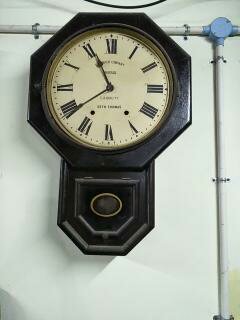
old fan

King George V and Queen Mary

Chola dagger

Entrance to the passageway

The tunnel

That evening, we boarded the train after dinner at the resort, at around 8. This trip has been a fun one, and I enjoyed every minute of it with Pradeep Chakravarthy, Priya Thiagarajan, and everyone else who came on the trip with me.