I had been going to the Tamil epigraphy class(or 'kalvettu' class) conducted by REACH foundation, from November to February, (2017-2018), and as part of the course, we went on two field visits. The first one was to 3 temples on the Palar. Cheyyar, Natteri Brahmadesam, and the (suspected) resting place of Rajendra Chola in Pudur.
As all heritage trips go, we were up early in the morning, and off to the meeting point. I found myself at the meeting point well before everyone, but in no time, the van was there, and we were off.
As the van meandered around GST road, picking up people, and making its way toward the Palar river, the day got on.
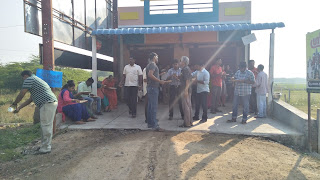
We crossed the Palar soon enough, and ate our breakfast on the roadside. The food on REACH trips is fantastic. They have some luck with caterers always. Breakfast, of idly, vadai, pongal chutney and sambar is divine, and goes down faster than you know it.

Soon we were back on the road, and on our way to Cheyyar.
Cheyyar is a town on the river Cheyyar, and the main temple there is full of inscriptions. Unfortunately, a few have gotten covered up, but luckily, most of them are well preserved. The inscriptions are in both Tamil and Telugu, and number over 30, quite a decent number. This temple is to be noted because one kalvettu devotes itself entirely on the Ay (cowherd) community, from the period of the later Cholas. No other community has got this achievement to their name. Cheyyar also has interesting drawings on the floor, from around 500 years ago.
The inscriptions begin from around the period of Sundera Chola, but as Sambuverayar inscriptions, and only after Rajaraja do the Sambuvarayar chieftains acknowledge Chola overlordship.
The inscriptions also include Kopperunjingans, and Pandya, especially Veera Pandya.
Inscriptions can be found on two opposing walls before the sanctum, and on the outer wall of the temple. Some half inscriptions are also to be found on side mandapams.
There are some inscriptions in the well of the garbagraha, but a majority of these have been sandblasted, as they begin, but end abruptly.
Sandblasting is a method of "cleaning" temple walls, that removes inscriptions. It is an illegal practice, and must be discouraged.
One very fascinating thing about Cheyyar is the pre-pallava (pre 2nd century CE/BC) Ganesha, almost horizontal, and just about lifted from the rock.


From Cheyyar, we went to a saptamatrika temple, built in the 13th century, apparently, and patronized by Veerapandiya Kattabomman, a petty ruler in the Nellai district. Now only these stones, and the idols inside are of any antique value.

Natteri Brahmadesam, on the Palar,was the next stop. and we had lunch in the middle of some fields. Lunch again was superb, puliyodharey/pulyogare, curd rice, appalam, oorgai and a vegetable.
Brahmadesam is an ASI site, claimed to be the resting place of Rajendra I. But if it is, the appearance of inscriptions before his time is really baffling.
The stone used here is sandstone, and is flaking off slowly. There have been stones found around, but they are being assembled slowly, and they don't seem to fit in anywhere, though some have carvings, and partial inscriptions.
The inscriptions here include Parthibendra Pallava's, Rajaraja, Rajendra, Parantaka I, Parantaka II, and possibly Aditya Karikala, and an interesting one on an Ilaneer(coconut water) pandi being set up on the death of Vallavarayar Bandiyathenvan's wife(his name is repeatedly mentioned as Bandiyathevan, and not Vandiyathevan as mentioned elsewhere).


From here we went to a small temple, now almost abandoned, and overgrown all around. The original entrance has been abandoned, and a wall broken down to create a new entrance. The Vimanam here is not the usual one you find.
The temple has its earliest kalvettu going back to the time of Rajadhiraja, eldest son of Rajendra, from his fifth year of rule. It is suspected that this temple may be the pallipadai of Rajendra! There are clues in the inscription, as well as the fact that no inscriptions are available from Rajendra's time or before.
This temple also has the meikeerthi of the first of the later cholas, Kulothunga I. from his twenty second year. The son of the Vengi king, and grandson of Kundavi, sister of Rajendra, he was mostly Chola in blood. After ruling as a small ruler in Bastar for a while, he moved South and took over as the Chola emperor when Rajendra's grandson, the fifth ruler after Rajendra I died.
We took an estampage here of a Bukkaraya(one of the founders of the Vijaynagar kingdom's) inscription.
Estampage is a process of taking an ink print of an inscription. For this, you need to use a long roll of art paper, and dunk it in a tub of water. Then, wet the stone you want to take a rubbing of. Then put the wet paper on the stone and tap it into place by using a brush. This pushes the paper into the crevices of the carvings. Then with a dauber(roller) and ink, dab the paper. The areas which are raised(non-inscribed surfaces)will take the ink, while the submerged areas(inscribed surfaces) will remain blank.
Once the entire area of the inscription has been taken, put the paper out to dry, by gently rolling it off the wall. Once it has dried, you can fold it up, and put it away.


As the sun set, we finished taking an estampage of the whole inscription, though some of it was missing as that was where the wall had been broken, and we left for the city soon after sunset.
As all heritage trips go, we were up early in the morning, and off to the meeting point. I found myself at the meeting point well before everyone, but in no time, the van was there, and we were off.
As the van meandered around GST road, picking up people, and making its way toward the Palar river, the day got on.
We crossed the Palar soon enough, and ate our breakfast on the roadside. The food on REACH trips is fantastic. They have some luck with caterers always. Breakfast, of idly, vadai, pongal chutney and sambar is divine, and goes down faster than you know it.

The Palar

Breakast and discussions
Cheyyar is a town on the river Cheyyar, and the main temple there is full of inscriptions. Unfortunately, a few have gotten covered up, but luckily, most of them are well preserved. The inscriptions are in both Tamil and Telugu, and number over 30, quite a decent number. This temple is to be noted because one kalvettu devotes itself entirely on the Ay (cowherd) community, from the period of the later Cholas. No other community has got this achievement to their name. Cheyyar also has interesting drawings on the floor, from around 500 years ago.
The inscriptions begin from around the period of Sundera Chola, but as Sambuverayar inscriptions, and only after Rajaraja do the Sambuvarayar chieftains acknowledge Chola overlordship.
The inscriptions also include Kopperunjingans, and Pandya, especially Veera Pandya.
Inscriptions can be found on two opposing walls before the sanctum, and on the outer wall of the temple. Some half inscriptions are also to be found on side mandapams.
There are some inscriptions in the well of the garbagraha, but a majority of these have been sandblasted, as they begin, but end abruptly.
Sandblasting is a method of "cleaning" temple walls, that removes inscriptions. It is an illegal practice, and must be discouraged.
One very fascinating thing about Cheyyar is the pre-pallava (pre 2nd century CE/BC) Ganesha, almost horizontal, and just about lifted from the rock.


The 2nd century Ganesha

The way this ends abrubtly shows it has been sandblasted.


The corridor where we saw the majority of the inscriptons in the temple.

Inscriptions outside

Some idols in the temple compound
Brahmadesam is an ASI site, claimed to be the resting place of Rajendra I. But if it is, the appearance of inscriptions before his time is really baffling.
The stone used here is sandstone, and is flaking off slowly. There have been stones found around, but they are being assembled slowly, and they don't seem to fit in anywhere, though some have carvings, and partial inscriptions.
The inscriptions here include Parthibendra Pallava's, Rajaraja, Rajendra, Parantaka I, Parantaka II, and possibly Aditya Karikala, and an interesting one on an Ilaneer(coconut water) pandi being set up on the death of Vallavarayar Bandiyathenvan's wife(his name is repeatedly mentioned as Bandiyathevan, and not Vandiyathevan as mentioned elsewhere).

Fields

The Brahmadesam temple near Natteri

More fields around the temple

Gopuram

The inside of the Gopuram

Inscriptions


This image contains the words Shri Rajendra Chola

An inscribed stone

The inside of the temple

A corner of the temple

The Palar at an earlier stage
From here we went to a small temple, now almost abandoned, and overgrown all around. The original entrance has been abandoned, and a wall broken down to create a new entrance. The Vimanam here is not the usual one you find.
The temple has its earliest kalvettu going back to the time of Rajadhiraja, eldest son of Rajendra, from his fifth year of rule. It is suspected that this temple may be the pallipadai of Rajendra! There are clues in the inscription, as well as the fact that no inscriptions are available from Rajendra's time or before.
This temple also has the meikeerthi of the first of the later cholas, Kulothunga I. from his twenty second year. The son of the Vengi king, and grandson of Kundavi, sister of Rajendra, he was mostly Chola in blood. After ruling as a small ruler in Bastar for a while, he moved South and took over as the Chola emperor when Rajendra's grandson, the fifth ruler after Rajendra I died.
We took an estampage here of a Bukkaraya(one of the founders of the Vijaynagar kingdom's) inscription.
Estampage is a process of taking an ink print of an inscription. For this, you need to use a long roll of art paper, and dunk it in a tub of water. Then, wet the stone you want to take a rubbing of. Then put the wet paper on the stone and tap it into place by using a brush. This pushes the paper into the crevices of the carvings. Then with a dauber(roller) and ink, dab the paper. The areas which are raised(non-inscribed surfaces)will take the ink, while the submerged areas(inscribed surfaces) will remain blank.
Once the entire area of the inscription has been taken, put the paper out to dry, by gently rolling it off the wall. Once it has dried, you can fold it up, and put it away.

Pudur temple

The original entrance


Vijaynagar inscriptions

Kulothunga Chola I's meikeerthi

An elephant fights a horse

The Rajadhiraja inscription

An estampage
As the sun set, we finished taking an estampage of the whole inscription, though some of it was missing as that was where the wall had been broken, and we left for the city soon after sunset.


