Pages

Pages

Tuesday, 29 September 2020

The Founding Professors of Ashoka University (Part 1)

(This article first appeared in 'The Edict', Ashoka University's student newspaper on September 28, 2020, co-written with Diya Isha)

(image credits: The Edict)


The story of Ashoka’s Founding Professors begins in 2011. Professor Madhavi Menon had wanted to go back to India for a while, but the pedagogy of the universities in India wouldn’t guarantee the intellectual and financial independence she wanted. Although Professor Jonathan Gil Harris was on a sabbatical with her, he was unsure of how it would be to teach and live in India with an OCI. However, like most founding stories, an intervention came through in their lives: a meeting, and a phone call, respectively, with one of the founders: Pramath Raj Sinha. 

Sinha met Harris at Hotel Ashoka and invited him to speak at the Young Indian Fellowship institute he had set up. Harris had taught at Indian universities before, and his experiences had been jarring. As a professor, Gil was quick to notice the general intolerance Indian colleges had for inquisitive minds, conceiving passive students with every graduation. The YIFs he met changed his mind. Many of them came from diverse fields, and a question round of 20 minutes stretched to one and a half hours. Menon too gave a talk to the first batch of YIFs, her experience parallel to Harris’: “They were fantastic! So eager, and so curious,”. 

The envisioning of Ashoka, however, began in the US in 2012. Together, the founders, Harris and Menon began chalking out the core ideals of the university, and Sinha asked Harris and Menon to build a syllabus for the Centre of Writing and Communication: ‘’the basic pillar of an Ashoka education,” according to Menon. 

Before we move onto the next few years, we want to reinforce, as students and writers at the Edict, that though summed up in such a way, hours of strenuous and meticulous planning went into building up the ideals and core principles of our University. For many days and nights, from 2012 to August 2014,  Harris—founding Dean of Academic Affairs—Menon and Professor Rudrangshu Mukherjee—the VC designate—and later, as they joined, the other professors, ideated and debated on the structure and components of the University. 

As the conversation moved to India, the process of recruiting the other founding faculty began and with that, the conversations multiplied. With every new meeting, the underlying factor remained a pedagogy that essentialises a dialogic classroom. Professor Menon recounts that she jumped at the opportunity of teaching at this novel university. Still, Professor Mandakini Dubey was a bit unsure of Ashoka: “At the time it seemed out of the question for me because it sounded unbelievably far away,”. Professor Malavika Maheshwari too had a contention, one which had to do with the fact that Ashoka was a private university, but: “It was a bunch of founders… it was not a family-owned or business owned enterprise, and the idea of liberal arts was very very fascinating to me”. However, the fundamental foundation of Ashoka won them over. 

It is important to note that the primary advertisers of Ashoka were academic circles. The conversations, previously limited to the contracted faculty, augmented outside, attracting a few like Professor Malvika Maheshwari and Professor Aparna Vaidik. 

One of the essential themes of these conversations was the framework of Foundation Courses, which Menon refers to as “the spine of an entire four years at Ashoka”. The Foundation Courses would be multidisciplinary, and there would be a lot of importance given to Critical Thinking, emphasised Harris.


The structure of the degree was different from the one we’re exposed to right now. Foundation courses were supposed to occupy the first year of the four year degree, and the Ashoka Quest—a forgotten part of the Ashokan education—was scheduled to take place in the first semester of the second year. Professor Menon pointed out that if the earlier framework had persisted, we both, as second years, would be out in a field—a literal, corporate, non-profit or academic—during this Monsoon semester, figuring out what difference we wanted to make in the world as a citizen of the world, “Learning takes place in multiple locations, that learning is multifold in and out of itself,” she reinforces. Only after all these steps would a student choose their major. 

“Many of us had left quite cushy and glamorous jobs to come to Ashoka.” recalls  Vaidik, but “the pulsating energy of building a new institution from the ground up” made all of them take a leap of faith. As there were less than fifteen professors, to begin with, each had substantial individual responsibilities. Professor Aruni Kashyap mentions, “I was the only Creative Writing Professor for the first two years, and I had to design a program from scratch”. 

The admissions process was preceded by intensive outreach, as Ashoka, both in conception and in itself, was new to the country. Most of the founding professors were involved in the process, “All of us would take turns sitting in on interviews”, says Vaidik. According to them, the founding batch would set a precedent, and as Harris emphasised, they wanted students who were “different and idealistic”. In the end, 127 students formed the Founding batch. They were signing on, said Harris, “For an act of inspired jugaad”. Dubey cites these students as the, “biggest reason for why that first year was so incredibly exciting,”. “Each person was handpicked by the faculty themselves,” adds Vaidik. 

The time to move to campus was fast approaching, and Dubey recalls an announcement one evening that changed things enormously for this university. Almost overnight—as Menon reinforced—the government, with the UGC guidelines, disallowed a four-year programme, a few weeks before the first batch of Ashoka showed up on campus. With this spanner in the works, the entire Ashokan four year structure was thrown out the window, and with it, the Ashoka Quest program. However, August 2014 brought with it an end to the planning, and the beginning of the on-ground efforts of this very new, very exciting, much worked on, University. 

Sunday, 27 September 2020

What is the Yugma Network?

 (First published in 'The Edict', on September 8th 2020)

With the current state of the environment in India in shackles, one would imagine that our Environment Ministry would be doing all it can to rectify this. But recently, an online environmental activism group, ‘Fridays for Future’, was charged with terrorism, and their website was taken down. Though this charge was unsubstantiated, the website was eventually restored. It is still seen as an act of intimidation. 

The rationale provided for the charge was that they spammed the Environment Minister’s email account with suggestions on improvements for the EIA 2020 Draft Notification. This amendment caused quite a stir among environmentalists, accelerating changes that give a free hand to huge mining, fossil fuel, chemical, development, and infrastructure companies to operate without proper environmental checks or public consultations. As part of the amendment policy, the Environment ministry had to provide a window to allow for suggestions to be sent in. Over 20 lakh of which have been sent in so far. ‘Fridays for Future’ was one among several organizations sending suggestions and improvements – though most experts would consider the best move to be withdrawing the current notification and making the EIA a law. 

The last few months have seen a spike in the number of projects cleared by the MOEFCC that involve environmentally sensitive zones. In fact, according to an article in the Hindu (published May 23rd) “The Etalin dam (in the Dibang Valley, Arunachal Pradesh) is just one of more than 30 proposals that have been cleared or discussed over virtual meetings during the lockdown by India’s highest advisory bodies on wildlife — the National Board for Wildlife (NBWL) and FAC. The proposals affect 15 tiger reserves, sanctuaries, eco-sensitive zones, wildlife corridors, and other forest areas.” On top of all this, the Central government has decided to reopen its coal mines so as to enable the Atmanirbhar ambition (Financial Express, June 18). This, of course, will only lead to further environmental degradation. It is quite unfortunate that this is all being carried out when we have to deal with a pandemic at hand. 

The Environment Impact Assessment or EIA is a tool to measure the impact a proposed project or industry would have on an area, the environment, and the people. The EIA notification 2020, which is a proposed modification of EIA 2006, weakens many clauses of the pre-existing EIA, itself considered to be quite dismal. In its plea for review, the ministry said, “Issuance of notifications in multiple languages would, in any case, result in translation and interpretation issues resulting in the meaning of the words being obfuscated and often even lost.”

This has caused alarm to many. Some of whom have gone on to start movements, like the Yugma Initiative.


The Yugma Network was started in June, as a movement to gather the support of all college or university student clubs, committees, and councils across India. They sent a letter to the Ministry of Environment, Forest and Climate Change of India as well as the Prime Minister with more than 80 student body signatories (representing at least 30-40 thousand students). But have to date received no reply from either. 

The Yugma network believes that the reasons given by the Ministry provided are petty and inexcusable. The fact that the MoEFCC no longer wants to make the draft notification available in the previously agreed-upon 22 languages by itself speaks volumes. If the MoEFCC truly wanted to uphold the democratic values of our nation in regards to actually listening to what the people of our nation had to say about their draft EIA 2020, they would make it a priority to make the document accessible to the people, and in a country like ours, this would mean the translation of the said document into at least our constitutionally recognized 22 languages.

The Karnataka High Court just stalled the final publication of the draft indefinitely until further notice. The hearing was on 7th September

- With inputs from Anjali Dalmia, co-founder, Yugma Network - 

Friday, 29 May 2020

Mahmudabad: Part 2


Even though Mahmudabad is a small town, the noises of the occasional passing car are themselves quite muted inside the compound of the Qila. A large mango orchard covers one side, while high walls rise up all around, making the Qila apart from the outside world. There is an unseen war at play here, and it is not modernity with antiquity within the Qila. No, these elements work with each other here, modernity having seeped in through the cracks in the walls (as it does everywhere). The tensions exist between inside and outside, between the world of acceptance and all-embracing culture, and the world of religious fanaticism and the cults that exist outside, just beyond the protective bricks, placed over one another, plastered with materials that are hardly used today.

One of these differences is very obvious. The town is not very prosperous, but the Qila shows signs of past grandeur. The opulence of a life that has faded away is still visible in the number of people who exist just to service the estate and work for the Raja and his family. The town on the other hand, is small and congested. But while our bus passed the streets on the way to Bilehra, i noticed a lot of small shops running on solar power, something that is rare even in larger cities. While the Qila holds on to the past and moves slowly forward, the town on the whole, not too opulent, makes a spring into the future.
Looking out from the Qila to the town


The first day that we were there, four of us had taken a walk in the afternoon. Stepping out of the quiet of the fort, we were surprised by the relative silence in the city too. On the main road, we noticed that a lot of shops were closed. Our queries would be answered soon enough. In the meantime, looking for a shop, one of those with me asked a man on a bike where we could find one that was open. He volunteered to take us there, and we navigated streets that narrowed down to reach a small shop that was open. Having purchased their aerated drinks we returned to the Qila, to look up why the town was practically under lockdown.

The Qila of Bilhera is a short distance away. The ceremonies we were to witness were to be conducted there. Earlier in the day, we had been taken around the Masjids of Mahmudabad, built in the 19th century, modelled on the mosques at Iraq that lie in the regions of Karbala, and built to scale. Mahmudabad Qila hosts many Majilis' (meetings) in the Imambara, and the region around it, especially these mosques, play an important part in the Muharram proceedings.

Muharram involves the construction of taziyas, miniature replicas of the tomb of Hussain, that are carried around, and laid to rest on the final day of the month. Each day of the month has its own significance, and a ceremony attached to that day.There was even a Taziya graveyard where the taziyas were buried at the end of the month. As I'd mentioned earlier, religious harmony is a part of the culture of Mahmudabad.  However, we would see signs of religious tension that day.

Bilehra is a fort that pre-dates the current Mahmudabad fortress, and was the original seat of power for Mahmudabad. Built over a razed Bhil fort (from where it gets its name), it is now also in a state of slow decay, yet holding on for all its worth. We met the Raja inside the building. Outside, the crowd had begun to grow, and the music had begun to play. The Raja was a little nervous, but not on account of the ceremony. There had apparently been a greater mobilisation of Hindus that day.

Part of the reason for this mobilisation was to do with the reason for the shutdown the previous day: a local politician, who happened to be building a temple to Nathuram Godse, had been killed in Lucknow. The crowds were milling around to pay their respects, He was from around Mahmudabad. The other part was the fact that Hindu groups mobilizing in the region had been on the rise for the last few years, especially around Muharram, but the Raja told us that it had never been this large. He feared that with the killing, a communal clash was quite possible that day. But the show must go on. And so he strapped his sword onto his belt, and stepped out to greet the crowds that had grown around the courtyard. The procession soon began, with the taziya made at Bilehra making stops at the mosques around the property. We followed it too. Interestingly, while we had been told to stick to traditional clothing and to cover our heads, it was only the women who were required to do so, while clothing among the crowds had no schema at all.
After that the Taziya left to pass through the town. Soon after it had left the gates and gone a little way, the Raja came back and joined us for lunch. After lunch we returned to Mahmudabad, and left early the next morning.

What is the role of royalty in our times? Does the Raja still wield any power at all?
Royalty is definitely, in the larger picture, defunct. There are only a handful of powerful rulers who are monarchs left in the world. The world of the royalty in India is one that we see as coming to an end with independence, but that isn't so. Princes and Zamindars did not lose their power and land overnight, it was a slow and deliberate process. Until the 1960s, most royal families still had large holdings and much wealth, that was taken away with the land ceiling act and the abolition of privy purses during Indira Gandhi's time. Yet this did not do away with the institution of royalty altogether. They still exist, people like the Raja of Mahmudabad, or the Arcot Nawab, or the Raja of Rajpipla (a very interesting personality, a strong supporter of the LGBTQIA+ community in India) who, in their own way, due to the institutionalisation of their existence, continue to have meaning for the people, if only ceremonial and titular. The people definitely respected the Raja of Mahmudabad, and he was a significant part of the proceedings. But he had no power over their lives, or any political power in himself. The royalty in India command respect and attention and continue to be quite wealthy on the whole. Yet their relevance matters on what they do - just like everyone else - but also on what their ancestors did. The Raja of Mahmudabad's family is not only ceremonial; they are also politically involved (the Raja is an ex-MLA from Congress, and Ali Khan, his son, a current member of the Samajwadi party); they frequently organise distribution of food, especially during religious festivals; they practice religious harmony; they are well read; and they make sure to remain connected to the people. All these points ensure that the Raja remains relevant and respected, at least in the areas close by.

As we left Mahmudabad the next morning, we were reunited with the world we were used to. Everything went on as it always had. When we got back to Ashoka, we were immediately returned to the lives we were used to. Life went on. As it did in Mahmudabad as well. Over time, the place will change, as it has done for so many centuries. As everything does. But for now, it remains an island in a sea of discontent that is UP.
A replica mosque in Mahmudabad of one of the mosques at Karbala 


Read more about the Battle of Karbala here where Hussain was martyred.
Read more about the murder here
More on the Raja of Rajpipla here

Thursday, 28 May 2020

Mahmudabad: Part 1


My first trip to the Eastern part of the state of Uttar Pradesh not only took me a few hundred kilometers away from familiar territory but also involved transporting me back a hundred years.

A quick weekend trip to Mahmudabad through Ashoka had me in for a weekend of rich food, halls that rang with a aura long-dead elsewhere, and experiencing a lifestyle that, for the most part, had died with the British.

The Qila of Mahmudabad, where we would be staying, is situated in the center of the town. The buildings and erstwhile fortifications are surrounded by a stream on one side over which runs a road. The metal gates are wide, but the bus we were in just about squeezed through. We were greeted by an open square facing an enormous doorway with two large fishes embossed on them. The symbols of Awadh. The decorations from the mid 19th century, reminiscent of the state of Awadh, make one realise instantly that everything within that imposing gateway was not what you'd expect to see in modern-day Uttar Pradesh. And indeed, as I stood on the steps of the Imambara, with the side of the main building on one side and the Zenana on the other, (Zenana not a word one hears commonly nowadays) with a large courtyard in front, the town hidden from sight, past midnight on the night before our departure, I thought back on the two days we'd spent there, and noted the air of aristocracy in the silence and the bustle, the ritualism that I'd seen earlier that day at Bilhera (and just a short while back behind where id been standing as well) or the knowledge, both long gone as well as solidly existent, in the books of the library, and the mind of the occupants of the Qila, that told you that this space was one you would be hard-pressed to find similar, elsewhere.

The Imambara and the Zenana


As soon as you enter the main Darwaza, you see a circular park-like structure with an outdated cannon in it, and a lamppost. The road goes around this little pocket and takes you to the main building - the Mukeem Manzil. Through a narrow corridor with rooms leading off it on all sides, one arrives at an open courtyard. The main Imambara of the Qila is up the stairs to one side of the courtyard, with the Zenana adjascent to it.

The Qila follows strict separation of genders: men are forbidden from entering the Zenana unless their close family reside there. The men on this trip were given mattresses in a large room inside the building on the first floor to sleep on.

The parts of the Qila that we frequented during our stay were on the first floor - The dining hall, and the rooms. The kitchen and the Raja's quarters were also situated here. The meals were mostly standard: Bread, eggs, an aloo tikki item, jam, butter and fruits for breakfast; mutton biriyani, galoti kababs, salad, roti and naan for lunch and dinner. This was what we had to eat for both days that we were there. But this is no way meant that the food became repetitive. Given a choice, (and assuming that weight gain was an imaginary concept) I could eat this food all my life.

The region of Mahmudabad is unique not just because of the living history of the Qila: it is also the fact that it is a Shi'a region. Most regions in our country that are Muslim majority are Sunni. However, Mahmudabad is unique for having a large Shi'a population and this has to do with its history, The rulers of the kingdom of Awadh were Shi'a, from Safdarjung in the mid-18th century, down to Wajid Ali Shah, who was deposed in 1856, a hundred years later, hailing from Persia. The Rajas of Mahmudabad were a vassal state, first to the Mughals, and later to the rulers of Awadh. In the dining room of the Mahmudabad 'Mukeem Manzil', the portraits of the Awadh rulers hang above the portraits of the rulers of Mahmudabad, looking down at the diners in dignified splendour.
.

We met the Raja that evening at dinner. He was someone who could speak about almost anything and everything, and was happy to as well. He regaled us with stories all that evening and each second spent with him was a learning experience. The Raja occupies a large ceremonial role in the local Moharram remembrances. Muharram commemorates the martyrdom of Mohammad's grandson, Hussain, who was killed in battle at Karbala (presently in Iraq) , and it is a ritual observed every year. What makes it unique in Mahmudabad is that the pall bearers are Dalits, and Hindus regularly participate in the festivals. Religious unity has been promoted by the Rajas of Mahmudabad, even after they lost their political status, one evidence being the usage of Raja, over Nawab or Shah. The Raja told us of how in his childhood, on the night of Muharram is not a celebration, but meant to make those present feel the grief of Hassan's death every year. And this is why we were there that weekend. To witness one of the rituals of Muharram at the Qila of Bilhera.

(To Be Continued)


Fading patterns on the walls

The open courtyard on the first floor. 

To read more about Sunnism and Shi'ism, as written about by Professor Ali Khan Mahmudabad: click here

Read more about the Raja of Mahmudabad and his tussle with the government over their properties here

A video of one of the Muharram ceremonies at the Qila. Click here

A small video on Muharram celebrations at Mahmudabad. Click here

Mahmudabad as seen from the road approaching it

Friday, 1 May 2020

Broken by Pandemic


I don’t like the pandemic. Let’s begin there. I dislike it very much, because it has taken me away from Ashoka and forced me to stay in one place for a month now. I managed to take a couple of walks soon after I got back, but with the national shutdown, I was stuck at home indefinitely. 
I know that I am not alone in this. People want to get back, get on with what they were doing. Yet, we have all been separated, and tossed into our own little spheres, with only the internet to connect us. Some are not in the most conducive environments. Some are out to fend for themselves from the environment. Even though the idea of a greater good forces us to do what we do in this isolation, we still yearn for the day when we can leave again. Chennai is a social city. We often joke that, while the rest of the world enjoys six degrees of separation, if you have even four in this city from someone, you are a rarity. For a city like this, a pandemic lockdown has taken its toll. Everyone has begun cherishing their grocery trips, their gardens, and the spaces within which they can move around. 
The Pandemic, in other words, has made us appreciate what we have. Books are being read. Music tastes are being expanded. People are writing, singing, doing things they normally had no time for. The little things in life have become more precious to us. Learning, that we had put aside for when we have more time, has begun to happen at last. We know that we are going to be here for a while – so let’s make the best use of it. 
I remember leaving from Ashoka, I threw my clothes, a couple of books, and most of my coursework into my bag, and left for the airport with some friends. I knew I would miss being on campus, late nights at the Dhaba, meeting friends at the mess for meals, and all the energy and excitement that campus brought with it for me. But at home now, I have more time to myself. Sleep, a commodity rare at Ashoka, I am now catching up on. My friends are a little annoyed by it, I know. Staying up past 10:45 is rare these days. I have gone back to the schedule I maintained before Ashoka. The days are a little crazy now, almost surreal, with classes at home over my laptop, with an internet connection that on occasion has a mind of its own. But in between, there are things I can do for myself, that are impossible on campus. 

And of course, in the midst of all this, I experienced rain. A major point of positivity for the city. The rain. And I am no different. There is a visible change in my mood every time it rains. Tamil Nadu weatherman, the city’s most reliable weather forecaster, sends out predictions and updates on Facebook and Twitter, with people from across the city letting everyone else know where it has reached. And this causes excitement for all those reading, as they examine his images, and try to predict where it might go next. And as the overcast sky gives us some eternally-much-needed rain, and the first drops fall noiselessly on the balcony outside, everyone in the city feels a common joy, and in that rain, we know, despite everything else that is going on, we are connected. 


This article was first published by The Edict on their page
http://the-edict.in/index.php/2020/05/01/broken-by-pandemic/

Monday, 2 March 2020

History and Society in Sonepat


It was last Sunday that Revanth had invited me to Sonepat to explore its monuments. Revanth was a fellow history enthusiast, and a third year at Ashoka. He was documenting the monuments there, and he and I were headed for the initial trip to check out the town and see what we could see.

Leaving campus at 9, we walked to the highway where we caught a share auto heading to Sonepat. The share auto had two rows within it at the back and space for two next to the driver. Packed in there, we got to the town in about 20 minutes. Revanth was pretty impressed with the layout of the town on google maps, and its grid structure, but that was the last time either of us were pleasantly surprised by the town. 

Our first stop of the day was the tomb of Khwaja Khizr, behind the Khwaja Khizr park. The tomb dates back to the time of the Lodis, and is not too elaborate in construction. In front of it is a 4 acre public park that provides access to the monument. 

The tomb of Khwaja Khizr, 1520's Lodi era

The monument is accessed by a flight of stairs and a large gateway that leads to a large courtyard. In front of the stairs is an open to sky brick platform with two tombs. Built between 1522 and 1524, this tomb was built for the Sufi saint Khwaja Khizr son of Darya Khan Sarwani. There are a lot of floral motifs used around the structure.
The park was filled with people of all ages, divided according to age roughly. The young boys (and the occasional girl in their group) were playing their own games, the older boys were playing cricket, and the old women were sitting and talking amongst themselves. 
As we entered the park, a group of young boys were playing with a puppy, running around with it, and picking it up and moving it around on the single pathway approaching the monument. The pup could hardly move, and would waddle after the boy who clicked his fingers at the dog, jumping backward as he did. Revanth approached them and took some selfies with the pup, and struck up a conversation with them. As we moved towards the monument, he noted that the boys playing there were all upper caste, with names like Sharma and Khatri. In rural - or semi-rural as Sonepat was - Haryana, caste discrimination is pretty high. 
Just then a ball from the older boys who were playing cricket struck Revanth's bag. The boy who'd hit the ball came forward to apologise, but Revanth was not too upset. 
As we climbed the steps of the monument, an old lady, one of a group sitting at the base of the monument, asked him if he was ok, having seen him get hit. She then asked him why he hadnt gone on to scare or threaten them a little. We later talked about this, and realised this sort of thinking is practically absent in South India where people are just generally much nicer. 
The tomb structure has inscriptions all around, and over every door structure. The floor was covered in pigeon shit, which of course I had to step on when i went in.  

The tomb of the Sufi, with another tomb beside it, not visible in the photo

After we left the monument, stopping for a while at the buffalo pen next to it, and watching two bulls fight, we walked through the town. Both of us were amazed at the lack of aesthetic the town had to offer, and the essentially rural quality it had. There were hardly any vehicles on the road, E-rickshaws plied quite regularly but apart from them there were not too many cars or other vehicles. Houses were small, and only the upper caste had big houses. People were relaxing by the roadside, smoking hash and cigarettes. 
We walked along the streets, getting thoroughly confused in the maze-like alleyways. Hardly any of the monuments on our list were marked on Google maps, and some had multiple generic markings. We ended up at a main road just as it started to rain, so we took an auto back to Delhi road where the share autos ply towards Ashoka. 
Of course, just as we reached Delhi road the sun came out. So we went into a roadside cafe and had a snack. Realising it was economically unfeasible to return to the town area, we asked about the Durga mandir, that was originally a mosque (not in that way, but the temple was a mosque). 

Tucked away in a narrow gully by the main road, the minarets of this temple peek out from behind houses. When we first tried to enter, we passed the entrance to the gully. When we arrived, we almost missed the temple. The front of it has a large boards covering the minarets and domes, which confused us. As we entered, an old man greeted us with 'Ram Ram'. The next exchange had us very confused. "Whats in the temple?" he asked us. We both weren't sure what to respond. "Nothing" he replied himself, and left. 
In an old area called Mohalla Khan lies the mandir/masjid. The area's antiquity is vouched for by the intricate doorways seen around. The mosque was built during the decline of the Mughals in the 18th century. It was in use till the time of partition, when the Muslims (of then-Punjab) crossed over to Pakistan. Even after it became Haryana, the mosque remained in disuse. Of late, it has been used as a Durga temple, though slowly all evidence of its history are being erased. 
The inside shows no evidence of a mosque, and the entrance area just outside the temple/mosque is filled with other constructions. The whole place is tiled up, and it could well be a twenty year old temple if not for the minarets and the domes. 

It seems from a few articles that I later went through, that its only in the last decade that the inside was modified and the front covered. The first link, though with terrible grammar and bad photos, gives one an idea of the place in 2013. 

Revanth was insistent on a good photo of the domes. So we went around the side streets. Finding a decent location on a slope, we clicked some. But he was not satisfied. If only we could enter one of these houses and go to a terrace, he reminisced. Finally he built up the courage when two children entered a house. He asked them for those inside and they were quite nice people. A woman came and talked to us, and she gave us permission. Though there was also a man, it was the woman who seemed to have more say. As we noted, the women of Haryana seemed much tougher and able to hold their ground better, than women in the South, for the most part. They let us go to their terrace and take photos of the domes. After reading the article in the second link, I'm not so confident they will survive for many years to come. 

We then left for college, thanking the owners once again. We would definitely be back another day, to complete our quest to explore Sonepat's monuments. 

The domes and minarets as seen from the back, from a stranger's terrace, 18th century Mughal


Places: 


Links: 


Tuesday, 25 February 2020

A Walk along the Northern Ridge with Prof. Sanjyukta Datta


The First Heritage walk by the History society for the year took place on 1st February, 2020. Saturday had about 10 of us had accompanying Prof. Sanjyukta Datta in and around the Northern Ridge, visiting various monuments of the region. We had just entered the ridge area through the gate opposite Delhi University at around 11 in the morning and were looking forward to the day ahead.  As we approached the Flagstaff tower, our first stop of the day, Professor Datta informed us that the local Archaeological Survey of India (ASI) team was waiting for us.
The Flagstaff tower was built in the early 19th century and was used to hoist the British flag all the way up to 1947, said Professor Datta. This was where women and children hid during May 1857 when the Meerut rebels/mutineers had taken the city. They later fled from there to Ambala.
The ASI officials allowed us access into the structure. The inside is a single circular room with a spiral staircase in the centre, leading to a first-floor balcony, and finally a terrace on top with a 360 degree view.
Taking some group photos here, we walked down the path to a guardhouse, from the Tughlaq era.
The Southern guardhouse

The ridge has two major groups of monuments: Those from the Tughlaq era, and those connected to 1857 in some way. The guardhouse was a Tughlaq era monument, from when the ridge was Firoz Sha Tughlaq’s hunting grounds, and he had a hunting lodge here (evidence of which survives).
The guardhouse does not leave us with too many clues to the past, and we soon moved on to the Chauburji. This structure takes its name from the four domes that had adorned it in the past, only one of which currently survives. It has a large open area on the ground floor, and the first floor is an open-to-sky mosque with a large platform in the centre. One of the domes is in the corner of the terrace. In the last few years ASI has managed to restore what is left of the structure. Again, thanks to our ASI friends we were allowed to go in and explore.
The mosque on top of the structure has faded inscriptions around the doorway and the motifs have deteriorated over time, but the overall charm remains. Professor Datta pulled out a book on the 1857 events in Delhi, and showed us the photo of the Chauburji from soon after that. It looked quite different from the photo there, with half the building missing, and the structure was quite different. We decided to see if we could identify which part of that mosque coincided with the existing structure. After some effort, we were able to piece together which part corresponded to which, through inference. Here the ASI officials took their leave and we headed on.

We then left the ridge and headed to Pir Ghaib, that combined both eras of monuments; a Tughlaq tower that contained the myth of a 19th century disappearing Djinn, passing the sign to Hindu Rao Civil Hospital on the way.
Hindu Rao was a Marathi and brother-in-law to the Scindias of Nagpur, who had broken away and moved to Delhi. In 1835, William Frazer, a British official, was murdered, and his house on the ridge was acquired by Hindu Rao. The house acted as the headquarters to the British on the ridge in 1857, and later became a hospital (we passed the building a couple of stops later, and the current structure bears little to no resemblance to the early 19th century one).  

Pir Ghaib sits in the middle of modern residences, and looks completely out of place, yet comfortable in its unfamiliarity, like old furniture in a fancy new apartment. The structure was purportedly built in the time of Firoz Sha Tughlaq, again, a part of his lodge, and was perhaps an observatory, due to the holes built into the ceiling.
Pir Ghaib

From here we passed a Baoli, or stepwell of around the same time period, and passing Hindu Rao Civil Hospital (which I had mentioned earlier), in whose vicinity Timur, the Turkic warlord, is said to have pitched his tent when in Hindustan, we arrived at the Ashoka pillar.
Erected by Ashoka in Meerut, this was one of two pillars brought to the Delhi region by Firoz Shah Tughlaq. It contains a series of lines in Brahmi from the time of Ashoka, with a shorter, later inscription below. It was said to have been blown up around the middle of the 1710’s, and was later put back together and deciphered by the British in the 19th century.  After admiring this round rock shaped by a human 2300 odd years ago from all sides, it was time to move to the last stop of the day, the mutiny memorial.
The Ashoka pillar

This was the most modern monument of our walk as well. Built in the 1860’s, it provides a timeline of events for the British recapture of Delhi, as well as acting as a memorial to those who died on the British side during 1857. Later some of us opined that if we hadn’t known better, it could have looked like a church from a distance.(For more on the Mutiny memorial click here) Built at a height, it dominates the surroundings. This was also the area the British set up camp during their retake of the city.
With the walk now over, we all headed our separate ways. Most of us headed back to campus. It took a while for us to realise that the walk had been so long, we had missed lunch. But it didn’t matter. The walk had more than made up for it.  

Flagstaff tower

The path up the ridge as seen from the flagstaff tower


Chauburji

The crumbling mosque atop the Chauburji

The signpost to Hindu Rao Civil Hospital(now much further away)


Hole in the ceiling, possibly for Astronomy at Pir Ghaib


Ashoka pillar

The plaque at the base

Mutiny Memorial 


Locations: 


Hindu Rao signpost (rough location, next to the garbage dump)


This article first appeared in The Edict magazine of Ashoka University, it has been slightly modified for this blog

Monday, 29 July 2019

Elections to the Madras Presidency: Part 5 - End of an era, beginning of another


Rajaji
Gandhi and Rajaji

The Congress had won 5 bye-elections between 35 and 37, and it knew that it was sure of a victory. Various Justice leaders began joining the Congress en mass and they encouraged local support as well.In July 1936, the Congress took a decision to contest the following years elections. Sathyamurthi was the main driving force of the Congress in the province. At first Rajaji was not too enthusiastic about it, but he gave in a few months before the elections, and contested.

By this act, the Madras Presidency, along with Bengal, Bombay, Bihar, Assam and the United Provinces, had a separate upper house as well, for which elections were held. The lower house was the Assembly, and the upper house the council. Madras’s Council had 56 seats.
The Assembly now had a five year term, and the Council, one third of its members resign every three years.


In 1936, the Raja of Pithapuram and Muthiah Mudaliar created a People’s party, that split the Justice votes. They also served in drawing Justice attention away from the Congress, so the Justice party ended up focusing its campaign against the Peoples party rather than the Congress. The people were also expecting a change in government and did not want any more of the Justice government.

In the famous 1937 elections,  the Congress swept the polls. The Congress made every candidate take a pledge that they would not defect. It won because of its organizational ability, and the fact that it gave those with local support a seat. The Justice party was also losing its support, and trying to ensure the same leaders were re-elected.

Rajaji became the Chief Minister. At first, while the Congress hesitated to form the Government, the Governor, Irskine, set up an independent ministry, headed by Kurma Venkata Reddy Naidu, who had been acting governor earlier, in 1936. (He was also a part of the 1920 ministry).
This was the most convincing victory for the Congress, in any province, and one they had not expected. They were soon convinced of pushing their right to form government, and Rajaji was sworn in. This was also the elections Kamaraj entered politics.
Between 37 and 39, the Congress had empowered local administration, lowered their salaries, and worked to empower the people. But the problems of the Justice party plagued them as well. Congressmen were given preference over others, and there was clashes in the party for positions of power. By October 1937, Rajaji began issuing charges of sedition against people who spoke out against the government.
But then came 1939. The Congress ministries across the country resigned. Except for Bengal, Sindh and the NWFP, the Congress was a part of the Provincial government. They protested India’s involvement in the Second World War without the approval of the legislature, and resigned in protest. Governors rule was imposed in Madras from 1939 to 46, till the next elections were called.

The Governors during the war were Lord Irskine and Arthur Hope(Lord Rankeillour)

In 1946, the Congress again swept the polls. Justice party had been converted during governors rule to the apolitical Dravidar Karzagam, under Periyar, EV Ramaswamy Naikar. The Chief Minister was Prakasam. Factionalism emerged between Rajaji and Kamaraj. After a few weeks of politics, Prakasam was elected as the Chief Minister.
In December that year, the Provinces elected members to the Constituent Assembly. Due to their being 163 Congress members out of a house of 215, they elected 44 of the 49 members from Madras.
Prakasam lasted only a year, when differences emerged between himself and the high command. O P Ramaswamy Reddiar was appointed, and he would be the Chief Minister at the time of independence. But he too lasted only two years, when a no-confidence motion was passed against him. The last Chief minister in this tenure was PS Kumarawamy Raja who would remain until the General Elections of 1951.

Independence and after:

The Congress retained power till 1967, when the DMK won, pushing the Congress to the side-lines, where they remain to this day in Madras politics.
In 1956, with the linguistic reorganisation of states, the Andhra region  had broken away, and become its own state. Very soon, the Kannada districts had been unified with Mysore to form Karnataka, and the Malabar district with Travancore-Cochin to form Kerala. The Tamil region was renamed Tamil Nadu under the first DMK government.

In the end of the second decade of the 21st century, we see a change in the politics of the state. Emergence of new parties, and increasing dominance of national parties, may indicate that we are entering a fourth era of politics in Madras, the first being Justice rule, the Second Congress, the third DMK-ADMK.

A biopic on Rajaji, the first Congress CM of Madras

(FIN)

Saturday, 27 July 2019

Elections to the Madras Presidency: Part 4 - The times they are a'changin

The 1934 elections were here. With it came the end of Justice. They were not wiped out, like that, however. But the downward slide now became irreversible.

But first, "why no 1933 elections?" you may ask. Well, the Central government had expected a new Government of India act in 1934, and had delayed elections. But the act did not come in 34, so elections were held. (It was felt that it would be useless to have a government function for just a year before the reforms came, but that is just what happened).

1934 was also the first time women voted in the Central elections.

In October 1933, Sathyamurthi started a Tamilnad Congress Swarajya party, and decided to contest the elections, worrying the Nationalists in the party would not allow the Congress to contest. Interestingly, Gandhi gave his blessing to the party. In April 1934, an All India Swarajya party was formed under the Congress, but on April 14, the Congress in Patna passed a resolution to fight elections to the Legislative Assembly in the Centre. The Swarajya party was dissolved.

The Congress officially withdrew Civil Disobedience in 34, and first contested the national elections, in which they swept 11 of 16 seats in Madras Presidency. But they decided not to allow the Swarajists to form a ministry if they won the 34 elections in the Province. The Congress won the 34 Provincial elections, and were not allowed to form a ministry

Sathyamurthi was the Swaraj leader, which won 29 seats. However, due to the Congress ruling, he was relegated back for the second time. The Raja of Bobbili was allowed to continue with a minority government. Sathyamurthi however, became the representative of Madras city in the central Assembly, the elections for which had happened the previous month.

Bobbili would face a no-confidence motion when he did not appease a certain bloc in the party. To appease certain people, Bobbili created a fourth ministerial position and Usman, a Justice supporter and earlier the first Indian governor, was given the post.

Governor Erskine said, “I must say that I thought I knew something about playing funny politics but I must take my hat off to these Indians.”

 Act of 1935:
The new act was here at last.
The Government of India Act 1935 brought in Autonomy in the Provinces and abolished diarchy. Both Central houses were of a five year term now. The new act brought the number of people who could vote up to 14%, and the minimum requirement was that one could show proof that they were a citizen of a British-ruled province. There were totally 7 fields under which one could be a voter. A Council of Ministers was established, of which there would be ten for the Chief Minister of a state. The Governor would remain nominal head of state, and hold veto power, and could introduce bills without the suggestion of the Council.
Madras now had 20 seats in the Council of State, of which 2 were reserved for women.
There were 37 seats in the lower house, of which 2 were reserved for women.

For the first time, Constituencies were introduced, with each electing only one member, except in certain cases. There were 215 constituencies in Madras

Qualifications to be a voter:
The basic qualifications to be a voter in a general constituency were: 21 years of age, been a British subject, been the ruler or a subject of a federal state, been the ruler or subject of any other state if so prescribed, and subject to any prescribed conditions. Has to be of sound mind. Those who have committed corrupt practices will not be allowed to vote.
Can only vote if name is on the electoral roll. Given two weeks to send in notice. Husbands must apply on behalf of their wives.
In an electoral roll, a persons name, father or husbands name, surname, residence and nature of qualification is specified.
The electoral rolls were prepared in local languages, except in cities and European and Anglo-Indian constituencies, where they were in English.
Specifically to Madras, There was a ballot box for each voter, and each nominees slip was colour coded. When there is a tie between candidates, the winner is chosen randomly by a lot drawn in the presence of the returning officer.


The Congress was now ready to officially fight Provincial elections, which it did in the 1937 elections across the country. Though it still had issues with the new act, abolition of diarchy was something they had been fighting for. And now that they were going in, there was no stopping them.


John Erskine, Lord Erskine
Lord Erskine

(to be continued)

Thursday, 25 July 2019

Elections in the Madras Presidency, Pre Independence - Part 3: The dominance of Justice, 1923-34

Image result for raja of panagal
Raja of Panagal statue, Panagal park


In the Second elections, the Justice party faced a united opposition under - The Swarajists.


The Congress was represented by both groups, the Moderates and the extremeists, in the Presidency. However, the bulk of the party top brass were from the capital city, Madras, and at this point, the party was dominated by Moderates. In 1920, just a few months before the elections, Gandhi called for non-cooperation, and the Congress in Madras immediately pulled out of the elections. The Moderates had thrown their weight behind Gandhi and they dominated the Congress here. This irked a group in the party, who had been raring to fight the elections. From then on, until 1937, Gandhi set the Congress against constitutional agitation. However, this group felt that only by entering politics and elections could they make a difference. Some of those members fought the 1920 elections as independents anyway.

They received support and financing from CR Das and Motilal Nehru, and in the 1922 Congress session at Gaya, they attempted to bring the Congress back to elections the following year. However, they were outvoted. In 1923, they formed the Swaraj party within the Congress, and fought elections under that name.


 In 1923, the Swaraj party contested. Voting was higher this time,  58.8%. Dissent towards the Justice party had grown and the Swarajists took advantage of that. Initially the parties had contested to further their representation, the Justice Party for the non-Brahmin manifesto and the Congress for increased local control,  and get benefits from the government. But in the process, the Justice Party became all-powerful in under two years of governance, and corruption and nepotism started to set in.  Though the party won the 23 elections, they lost some seats to the Swarajists. T Rangachari, a Congress party member, was re-elected to the Central Legislative Assembly from Madras city.

The party had no real party structure, and it was not a single unified body. In 1923, there were only 63 SILF members in Madras city. Across the Presidency the party popped up and dissolved  just as quickly.

Willingdon wanted to create a happy family, and all sessions were held with members together. But Justice ministers were unable to do anything because finance and other important aspects were in the reserved list, and under the British.
Raja of Panagal continued as First Minister after the elections. Patro and TR Sivagnanam Pillai were the other two ministers.

The day after the formation of the Council, a group split away from the Justice Party, and CR Reddy, one of those who split away, called for a no-confidence motion. It was only by enlisting the votes of the nominated members did it fail, and that too by 1 vote. The Justice Party now did not have a majority but was still the single-largest party.

The idea of T nagar, the large area in Chennai city, had its origins in this government. The process of filling up Long tank began here.

In 1925, Thyagaraya Chetty died, and the Raja of Panagal was also made leader of the party. He influenced local elections, and nominated members who were favourable to him, a process that worked against him.

In 1926, the Swarajists won the elections. C R Reddy banded together all the Justice opposition under the Swarajists, saying “ Two Bad Parties are better than 4 logical groups” . Due to shifting loyalties, it was estimated between 40 and 48 of those elected were Swarajist supporters. Unfortunately, the Congress did not assent to them forming a ministry, and as they were still a part of the Congress, they had to agree. The Justice Party formed the opposition, and government was an independent government. However, the Swarajists were involved in the negotiations, and promised external support. The governor, now Viscount Goschen from 1924,  chose Dr Subbaroyan to be First Minister, and nominated others out of the elected representatives, to form the government. S Srinivasa Iyengar was elected to the Central Assembly.

In 1927, the Simon commission was sent to India, as part of a clause in the Act of 1919 to review the working of dyarchy. But the commission was rejected by the Congress on the grounds that there was no Indian member. They organized strikes everywhere it went, including Madras.

That year,  the Cabinet was reshuffled. Panagal had been working towards getting the Justice Party back in power. Technically, the Swaraj party was officially meant to obstruct the working of the government but they had given it their support. Panagal managed to bring some Swarajists over to the Justice side, and two of them, Muthiah Mudaliar, and Seturatnam Iyer, were installed as Ministers by the Governor, who dissolved the Council. In the new Cabinet, Dr Subbaroyan continued as First Minister. However, for a brief while now, the Swarajists were unable to function, having lost their influence, and having almost no patronage or finance. Many influencial Swarajists like CR Reddy began to work alongside the Justice party. For another year, Ramarayaningar would enjoy his earlier status and influence, but would never be First Minister again, because,
In 1928, the Raja of Panagal died. After a hard fought battle within the Justice Party, B Munnuswamy Naidu became the President of the Justice Party.

In the 1930 elections, the Justice party won with 35 seats. 43% of the electorate had voted this time, and Munnuswamy Naidu was sworn in as Chief Minister (the official term from now on). But to win, he had created alliances and factions. This was the beginning of the end of the Justice Party. Anti-zamindari riots began in Andhra that year, led by a Justicite-turned-Congressman, NG Ranga.
Munnuswamy Naidu was forced to resign in 1932 by the pro-zamindari faction, due to their unhappiness that none of their top candidates were accomodated in the new Cabinet. the Raja of Bobbili was appointed as Chief Minister, with RK Shanmugam Chetty and Arcot Ramaswamy Mudaliar(later the first Chair of ECOSOC in the UN). Ramaswamy Mudaliar would later go on to serve in the Central Legislature in 1934.(with two new ministers).

The Swarajists had looked to contest the election, but when Gandhi called for the Civil Disobedience movement, they dropped out. But some continued to contest as Independents, ignoring the Congress. The opposition was formed by Independent Nationalists, as they were called, led by Dr Subbaroyan.
The Great Depression had taken place in 1929, and it was felt right from 1930, and it began to hit hard under Naidu. Bobbili did not take steps to ensure that everyone was equally taken care of, and instead implemented pro-land policies.


In 1932, the Tamil newspaper ceased publication. Soon Justice also sank, and Bobbili put his own money in to support it. But when he was accused of influence, he let it sink.
Image result for justice newspaper
Justice newspaper

(to be continued)
Image result for munuswamy naidu
Munuswamy Naidu, Panagal's successor

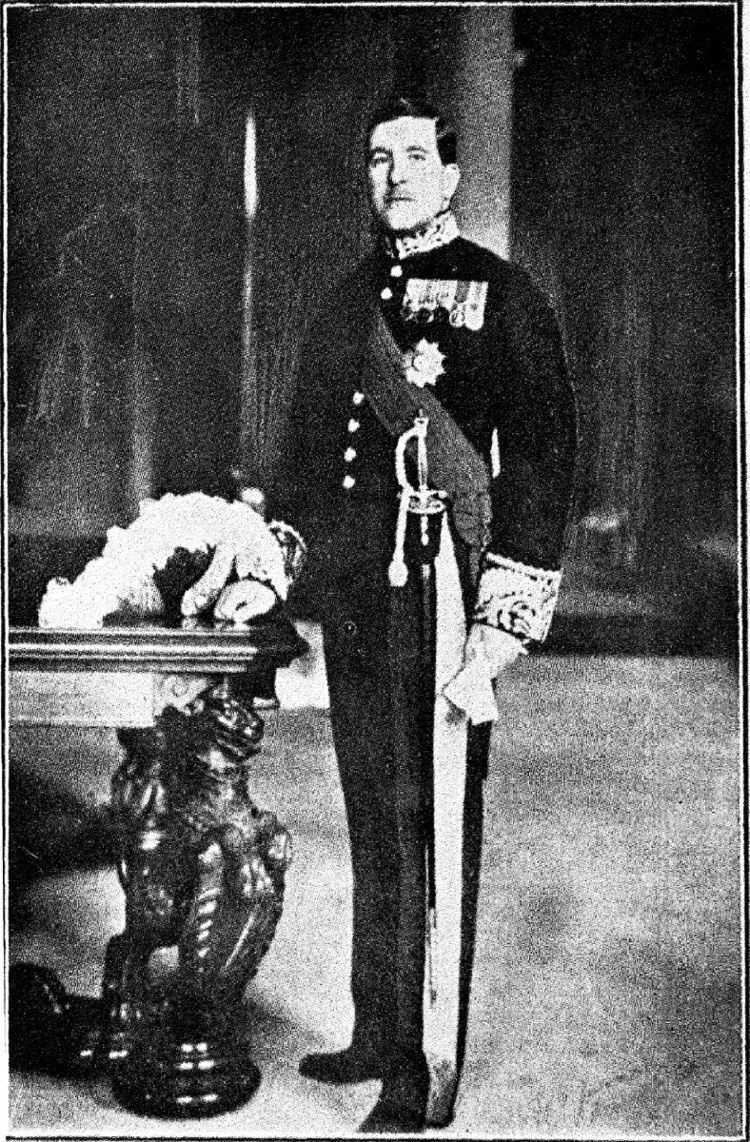
Governors of the Presidency so far during Justice rule: 

Willingdon: 1919 - 1924
Sir Charles Todhunter(acting)
George Joachim Goschen, 2nd Viscount Goschen, by Paul Laib, after  Sir Oswald Birley, (1927) - NPG D34642 - © estate of Mark Birley
Sir Norman Marjoribanks(acting)
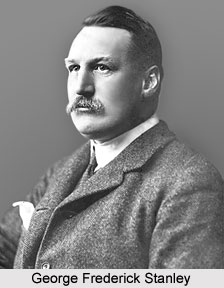
George Frederick Stanley, Governor of Madras Presidency


Click here for a video to the Prince of Wales's tour in 1922, that was during the Non-Cooperation movement, and part of the reason why the Congress did not fight the 1920 elections