Pages

Pages

Showing posts with label Congress. Show all posts

Monday, 29 July 2019

Elections to the Madras Presidency: Part 5 - End of an era, beginning of another


Rajaji
Gandhi and Rajaji

The Congress had won 5 bye-elections between 35 and 37, and it knew that it was sure of a victory. Various Justice leaders began joining the Congress en mass and they encouraged local support as well.In July 1936, the Congress took a decision to contest the following years elections. Sathyamurthi was the main driving force of the Congress in the province. At first Rajaji was not too enthusiastic about it, but he gave in a few months before the elections, and contested.

By this act, the Madras Presidency, along with Bengal, Bombay, Bihar, Assam and the United Provinces, had a separate upper house as well, for which elections were held. The lower house was the Assembly, and the upper house the council. Madras’s Council had 56 seats.
The Assembly now had a five year term, and the Council, one third of its members resign every three years.


In 1936, the Raja of Pithapuram and Muthiah Mudaliar created a People’s party, that split the Justice votes. They also served in drawing Justice attention away from the Congress, so the Justice party ended up focusing its campaign against the Peoples party rather than the Congress. The people were also expecting a change in government and did not want any more of the Justice government.

In the famous 1937 elections,  the Congress swept the polls. The Congress made every candidate take a pledge that they would not defect. It won because of its organizational ability, and the fact that it gave those with local support a seat. The Justice party was also losing its support, and trying to ensure the same leaders were re-elected.

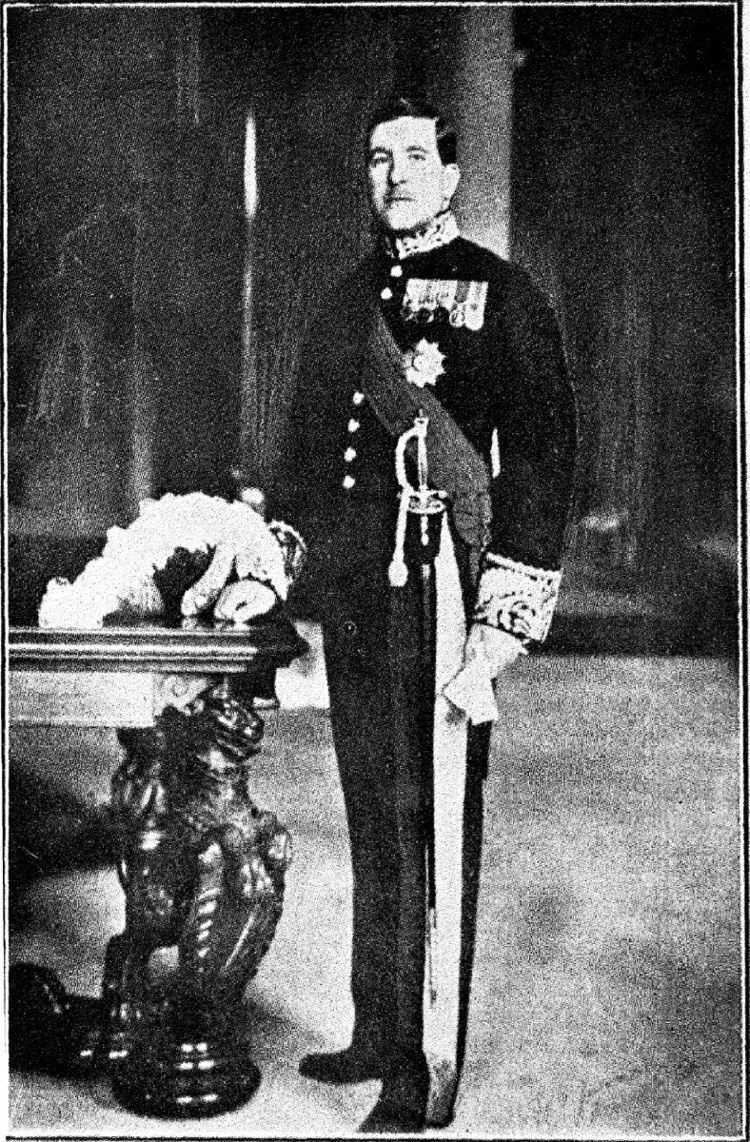
Rajaji became the Chief Minister. At first, while the Congress hesitated to form the Government, the Governor, Irskine, set up an independent ministry, headed by Kurma Venkata Reddy Naidu, who had been acting governor earlier, in 1936. (He was also a part of the 1920 ministry).
This was the most convincing victory for the Congress, in any province, and one they had not expected. They were soon convinced of pushing their right to form government, and Rajaji was sworn in. This was also the elections Kamaraj entered politics.
Between 37 and 39, the Congress had empowered local administration, lowered their salaries, and worked to empower the people. But the problems of the Justice party plagued them as well. Congressmen were given preference over others, and there was clashes in the party for positions of power. By October 1937, Rajaji began issuing charges of sedition against people who spoke out against the government.
But then came 1939. The Congress ministries across the country resigned. Except for Bengal, Sindh and the NWFP, the Congress was a part of the Provincial government. They protested India’s involvement in the Second World War without the approval of the legislature, and resigned in protest. Governors rule was imposed in Madras from 1939 to 46, till the next elections were called.

The Governors during the war were Lord Irskine and Arthur Hope(Lord Rankeillour)

In 1946, the Congress again swept the polls. Justice party had been converted during governors rule to the apolitical Dravidar Karzagam, under Periyar, EV Ramaswamy Naikar. The Chief Minister was Prakasam. Factionalism emerged between Rajaji and Kamaraj. After a few weeks of politics, Prakasam was elected as the Chief Minister.
In December that year, the Provinces elected members to the Constituent Assembly. Due to their being 163 Congress members out of a house of 215, they elected 44 of the 49 members from Madras.
Prakasam lasted only a year, when differences emerged between himself and the high command. O P Ramaswamy Reddiar was appointed, and he would be the Chief Minister at the time of independence. But he too lasted only two years, when a no-confidence motion was passed against him. The last Chief minister in this tenure was PS Kumarawamy Raja who would remain until the General Elections of 1951.

Independence and after:

The Congress retained power till 1967, when the DMK won, pushing the Congress to the side-lines, where they remain to this day in Madras politics.
In 1956, with the linguistic reorganisation of states, the Andhra region  had broken away, and become its own state. Very soon, the Kannada districts had been unified with Mysore to form Karnataka, and the Malabar district with Travancore-Cochin to form Kerala. The Tamil region was renamed Tamil Nadu under the first DMK government.

In the end of the second decade of the 21st century, we see a change in the politics of the state. Emergence of new parties, and increasing dominance of national parties, may indicate that we are entering a fourth era of politics in Madras, the first being Justice rule, the Second Congress, the third DMK-ADMK.

A biopic on Rajaji, the first Congress CM of Madras

(FIN)

Saturday, 27 July 2019

Elections to the Madras Presidency: Part 4 - The times they are a'changin

The 1934 elections were here. With it came the end of Justice. They were not wiped out, like that, however. But the downward slide now became irreversible.

But first, "why no 1933 elections?" you may ask. Well, the Central government had expected a new Government of India act in 1934, and had delayed elections. But the act did not come in 34, so elections were held. (It was felt that it would be useless to have a government function for just a year before the reforms came, but that is just what happened).

1934 was also the first time women voted in the Central elections.

In October 1933, Sathyamurthi started a Tamilnad Congress Swarajya party, and decided to contest the elections, worrying the Nationalists in the party would not allow the Congress to contest. Interestingly, Gandhi gave his blessing to the party. In April 1934, an All India Swarajya party was formed under the Congress, but on April 14, the Congress in Patna passed a resolution to fight elections to the Legislative Assembly in the Centre. The Swarajya party was dissolved.

The Congress officially withdrew Civil Disobedience in 34, and first contested the national elections, in which they swept 11 of 16 seats in Madras Presidency. But they decided not to allow the Swarajists to form a ministry if they won the 34 elections in the Province. The Congress won the 34 Provincial elections, and were not allowed to form a ministry

Sathyamurthi was the Swaraj leader, which won 29 seats. However, due to the Congress ruling, he was relegated back for the second time. The Raja of Bobbili was allowed to continue with a minority government. Sathyamurthi however, became the representative of Madras city in the central Assembly, the elections for which had happened the previous month.

Bobbili would face a no-confidence motion when he did not appease a certain bloc in the party. To appease certain people, Bobbili created a fourth ministerial position and Usman, a Justice supporter and earlier the first Indian governor, was given the post.

Governor Erskine said, “I must say that I thought I knew something about playing funny politics but I must take my hat off to these Indians.”

 Act of 1935:
The new act was here at last.
The Government of India Act 1935 brought in Autonomy in the Provinces and abolished diarchy. Both Central houses were of a five year term now. The new act brought the number of people who could vote up to 14%, and the minimum requirement was that one could show proof that they were a citizen of a British-ruled province. There were totally 7 fields under which one could be a voter. A Council of Ministers was established, of which there would be ten for the Chief Minister of a state. The Governor would remain nominal head of state, and hold veto power, and could introduce bills without the suggestion of the Council.
Madras now had 20 seats in the Council of State, of which 2 were reserved for women.
There were 37 seats in the lower house, of which 2 were reserved for women.

For the first time, Constituencies were introduced, with each electing only one member, except in certain cases. There were 215 constituencies in Madras

Qualifications to be a voter:
The basic qualifications to be a voter in a general constituency were: 21 years of age, been a British subject, been the ruler or a subject of a federal state, been the ruler or subject of any other state if so prescribed, and subject to any prescribed conditions. Has to be of sound mind. Those who have committed corrupt practices will not be allowed to vote.
Can only vote if name is on the electoral roll. Given two weeks to send in notice. Husbands must apply on behalf of their wives.
In an electoral roll, a persons name, father or husbands name, surname, residence and nature of qualification is specified.
The electoral rolls were prepared in local languages, except in cities and European and Anglo-Indian constituencies, where they were in English.
Specifically to Madras, There was a ballot box for each voter, and each nominees slip was colour coded. When there is a tie between candidates, the winner is chosen randomly by a lot drawn in the presence of the returning officer.


The Congress was now ready to officially fight Provincial elections, which it did in the 1937 elections across the country. Though it still had issues with the new act, abolition of diarchy was something they had been fighting for. And now that they were going in, there was no stopping them.


John Erskine, Lord Erskine
Lord Erskine

(to be continued)