Pages

Pages

Monday, 29 July 2019

Elections to the Madras Presidency: Part 5 - End of an era, beginning of another


Rajaji
Gandhi and Rajaji

The Congress had won 5 bye-elections between 35 and 37, and it knew that it was sure of a victory. Various Justice leaders began joining the Congress en mass and they encouraged local support as well.In July 1936, the Congress took a decision to contest the following years elections. Sathyamurthi was the main driving force of the Congress in the province. At first Rajaji was not too enthusiastic about it, but he gave in a few months before the elections, and contested.

By this act, the Madras Presidency, along with Bengal, Bombay, Bihar, Assam and the United Provinces, had a separate upper house as well, for which elections were held. The lower house was the Assembly, and the upper house the council. Madras’s Council had 56 seats.
The Assembly now had a five year term, and the Council, one third of its members resign every three years.


In 1936, the Raja of Pithapuram and Muthiah Mudaliar created a People’s party, that split the Justice votes. They also served in drawing Justice attention away from the Congress, so the Justice party ended up focusing its campaign against the Peoples party rather than the Congress. The people were also expecting a change in government and did not want any more of the Justice government.

In the famous 1937 elections,  the Congress swept the polls. The Congress made every candidate take a pledge that they would not defect. It won because of its organizational ability, and the fact that it gave those with local support a seat. The Justice party was also losing its support, and trying to ensure the same leaders were re-elected.

Rajaji became the Chief Minister. At first, while the Congress hesitated to form the Government, the Governor, Irskine, set up an independent ministry, headed by Kurma Venkata Reddy Naidu, who had been acting governor earlier, in 1936. (He was also a part of the 1920 ministry).
This was the most convincing victory for the Congress, in any province, and one they had not expected. They were soon convinced of pushing their right to form government, and Rajaji was sworn in. This was also the elections Kamaraj entered politics.
Between 37 and 39, the Congress had empowered local administration, lowered their salaries, and worked to empower the people. But the problems of the Justice party plagued them as well. Congressmen were given preference over others, and there was clashes in the party for positions of power. By October 1937, Rajaji began issuing charges of sedition against people who spoke out against the government.
But then came 1939. The Congress ministries across the country resigned. Except for Bengal, Sindh and the NWFP, the Congress was a part of the Provincial government. They protested India’s involvement in the Second World War without the approval of the legislature, and resigned in protest. Governors rule was imposed in Madras from 1939 to 46, till the next elections were called.

The Governors during the war were Lord Irskine and Arthur Hope(Lord Rankeillour)

In 1946, the Congress again swept the polls. Justice party had been converted during governors rule to the apolitical Dravidar Karzagam, under Periyar, EV Ramaswamy Naikar. The Chief Minister was Prakasam. Factionalism emerged between Rajaji and Kamaraj. After a few weeks of politics, Prakasam was elected as the Chief Minister.
In December that year, the Provinces elected members to the Constituent Assembly. Due to their being 163 Congress members out of a house of 215, they elected 44 of the 49 members from Madras.
Prakasam lasted only a year, when differences emerged between himself and the high command. O P Ramaswamy Reddiar was appointed, and he would be the Chief Minister at the time of independence. But he too lasted only two years, when a no-confidence motion was passed against him. The last Chief minister in this tenure was PS Kumarawamy Raja who would remain until the General Elections of 1951.

Independence and after:

The Congress retained power till 1967, when the DMK won, pushing the Congress to the side-lines, where they remain to this day in Madras politics.
In 1956, with the linguistic reorganisation of states, the Andhra region  had broken away, and become its own state. Very soon, the Kannada districts had been unified with Mysore to form Karnataka, and the Malabar district with Travancore-Cochin to form Kerala. The Tamil region was renamed Tamil Nadu under the first DMK government.

In the end of the second decade of the 21st century, we see a change in the politics of the state. Emergence of new parties, and increasing dominance of national parties, may indicate that we are entering a fourth era of politics in Madras, the first being Justice rule, the Second Congress, the third DMK-ADMK.

A biopic on Rajaji, the first Congress CM of Madras

(FIN)

Saturday, 27 July 2019

Elections to the Madras Presidency: Part 4 - The times they are a'changin

The 1934 elections were here. With it came the end of Justice. They were not wiped out, like that, however. But the downward slide now became irreversible.

But first, "why no 1933 elections?" you may ask. Well, the Central government had expected a new Government of India act in 1934, and had delayed elections. But the act did not come in 34, so elections were held. (It was felt that it would be useless to have a government function for just a year before the reforms came, but that is just what happened).

1934 was also the first time women voted in the Central elections.

In October 1933, Sathyamurthi started a Tamilnad Congress Swarajya party, and decided to contest the elections, worrying the Nationalists in the party would not allow the Congress to contest. Interestingly, Gandhi gave his blessing to the party. In April 1934, an All India Swarajya party was formed under the Congress, but on April 14, the Congress in Patna passed a resolution to fight elections to the Legislative Assembly in the Centre. The Swarajya party was dissolved.

The Congress officially withdrew Civil Disobedience in 34, and first contested the national elections, in which they swept 11 of 16 seats in Madras Presidency. But they decided not to allow the Swarajists to form a ministry if they won the 34 elections in the Province. The Congress won the 34 Provincial elections, and were not allowed to form a ministry

Sathyamurthi was the Swaraj leader, which won 29 seats. However, due to the Congress ruling, he was relegated back for the second time. The Raja of Bobbili was allowed to continue with a minority government. Sathyamurthi however, became the representative of Madras city in the central Assembly, the elections for which had happened the previous month.

Bobbili would face a no-confidence motion when he did not appease a certain bloc in the party. To appease certain people, Bobbili created a fourth ministerial position and Usman, a Justice supporter and earlier the first Indian governor, was given the post.

Governor Erskine said, “I must say that I thought I knew something about playing funny politics but I must take my hat off to these Indians.”

 Act of 1935:
The new act was here at last.
The Government of India Act 1935 brought in Autonomy in the Provinces and abolished diarchy. Both Central houses were of a five year term now. The new act brought the number of people who could vote up to 14%, and the minimum requirement was that one could show proof that they were a citizen of a British-ruled province. There were totally 7 fields under which one could be a voter. A Council of Ministers was established, of which there would be ten for the Chief Minister of a state. The Governor would remain nominal head of state, and hold veto power, and could introduce bills without the suggestion of the Council.
Madras now had 20 seats in the Council of State, of which 2 were reserved for women.
There were 37 seats in the lower house, of which 2 were reserved for women.

For the first time, Constituencies were introduced, with each electing only one member, except in certain cases. There were 215 constituencies in Madras

Qualifications to be a voter:
The basic qualifications to be a voter in a general constituency were: 21 years of age, been a British subject, been the ruler or a subject of a federal state, been the ruler or subject of any other state if so prescribed, and subject to any prescribed conditions. Has to be of sound mind. Those who have committed corrupt practices will not be allowed to vote.
Can only vote if name is on the electoral roll. Given two weeks to send in notice. Husbands must apply on behalf of their wives.
In an electoral roll, a persons name, father or husbands name, surname, residence and nature of qualification is specified.
The electoral rolls were prepared in local languages, except in cities and European and Anglo-Indian constituencies, where they were in English.
Specifically to Madras, There was a ballot box for each voter, and each nominees slip was colour coded. When there is a tie between candidates, the winner is chosen randomly by a lot drawn in the presence of the returning officer.


The Congress was now ready to officially fight Provincial elections, which it did in the 1937 elections across the country. Though it still had issues with the new act, abolition of diarchy was something they had been fighting for. And now that they were going in, there was no stopping them.


John Erskine, Lord Erskine
Lord Erskine

(to be continued)

Thursday, 25 July 2019

Elections in the Madras Presidency, Pre Independence - Part 3: The dominance of Justice, 1923-34

Image result for raja of panagal
Raja of Panagal statue, Panagal park


In the Second elections, the Justice party faced a united opposition under - The Swarajists.


The Congress was represented by both groups, the Moderates and the extremeists, in the Presidency. However, the bulk of the party top brass were from the capital city, Madras, and at this point, the party was dominated by Moderates. In 1920, just a few months before the elections, Gandhi called for non-cooperation, and the Congress in Madras immediately pulled out of the elections. The Moderates had thrown their weight behind Gandhi and they dominated the Congress here. This irked a group in the party, who had been raring to fight the elections. From then on, until 1937, Gandhi set the Congress against constitutional agitation. However, this group felt that only by entering politics and elections could they make a difference. Some of those members fought the 1920 elections as independents anyway.

They received support and financing from CR Das and Motilal Nehru, and in the 1922 Congress session at Gaya, they attempted to bring the Congress back to elections the following year. However, they were outvoted. In 1923, they formed the Swaraj party within the Congress, and fought elections under that name.


 In 1923, the Swaraj party contested. Voting was higher this time,  58.8%. Dissent towards the Justice party had grown and the Swarajists took advantage of that. Initially the parties had contested to further their representation, the Justice Party for the non-Brahmin manifesto and the Congress for increased local control,  and get benefits from the government. But in the process, the Justice Party became all-powerful in under two years of governance, and corruption and nepotism started to set in.  Though the party won the 23 elections, they lost some seats to the Swarajists. T Rangachari, a Congress party member, was re-elected to the Central Legislative Assembly from Madras city.

The party had no real party structure, and it was not a single unified body. In 1923, there were only 63 SILF members in Madras city. Across the Presidency the party popped up and dissolved  just as quickly.

Willingdon wanted to create a happy family, and all sessions were held with members together. But Justice ministers were unable to do anything because finance and other important aspects were in the reserved list, and under the British.
Raja of Panagal continued as First Minister after the elections. Patro and TR Sivagnanam Pillai were the other two ministers.

The day after the formation of the Council, a group split away from the Justice Party, and CR Reddy, one of those who split away, called for a no-confidence motion. It was only by enlisting the votes of the nominated members did it fail, and that too by 1 vote. The Justice Party now did not have a majority but was still the single-largest party.

The idea of T nagar, the large area in Chennai city, had its origins in this government. The process of filling up Long tank began here.

In 1925, Thyagaraya Chetty died, and the Raja of Panagal was also made leader of the party. He influenced local elections, and nominated members who were favourable to him, a process that worked against him.

In 1926, the Swarajists won the elections. C R Reddy banded together all the Justice opposition under the Swarajists, saying “ Two Bad Parties are better than 4 logical groups” . Due to shifting loyalties, it was estimated between 40 and 48 of those elected were Swarajist supporters. Unfortunately, the Congress did not assent to them forming a ministry, and as they were still a part of the Congress, they had to agree. The Justice Party formed the opposition, and government was an independent government. However, the Swarajists were involved in the negotiations, and promised external support. The governor, now Viscount Goschen from 1924,  chose Dr Subbaroyan to be First Minister, and nominated others out of the elected representatives, to form the government. S Srinivasa Iyengar was elected to the Central Assembly.

In 1927, the Simon commission was sent to India, as part of a clause in the Act of 1919 to review the working of dyarchy. But the commission was rejected by the Congress on the grounds that there was no Indian member. They organized strikes everywhere it went, including Madras.

That year,  the Cabinet was reshuffled. Panagal had been working towards getting the Justice Party back in power. Technically, the Swaraj party was officially meant to obstruct the working of the government but they had given it their support. Panagal managed to bring some Swarajists over to the Justice side, and two of them, Muthiah Mudaliar, and Seturatnam Iyer, were installed as Ministers by the Governor, who dissolved the Council. In the new Cabinet, Dr Subbaroyan continued as First Minister. However, for a brief while now, the Swarajists were unable to function, having lost their influence, and having almost no patronage or finance. Many influencial Swarajists like CR Reddy began to work alongside the Justice party. For another year, Ramarayaningar would enjoy his earlier status and influence, but would never be First Minister again, because,
In 1928, the Raja of Panagal died. After a hard fought battle within the Justice Party, B Munnuswamy Naidu became the President of the Justice Party.

In the 1930 elections, the Justice party won with 35 seats. 43% of the electorate had voted this time, and Munnuswamy Naidu was sworn in as Chief Minister (the official term from now on). But to win, he had created alliances and factions. This was the beginning of the end of the Justice Party. Anti-zamindari riots began in Andhra that year, led by a Justicite-turned-Congressman, NG Ranga.
Munnuswamy Naidu was forced to resign in 1932 by the pro-zamindari faction, due to their unhappiness that none of their top candidates were accomodated in the new Cabinet. the Raja of Bobbili was appointed as Chief Minister, with RK Shanmugam Chetty and Arcot Ramaswamy Mudaliar(later the first Chair of ECOSOC in the UN). Ramaswamy Mudaliar would later go on to serve in the Central Legislature in 1934.(with two new ministers).

The Swarajists had looked to contest the election, but when Gandhi called for the Civil Disobedience movement, they dropped out. But some continued to contest as Independents, ignoring the Congress. The opposition was formed by Independent Nationalists, as they were called, led by Dr Subbaroyan.
The Great Depression had taken place in 1929, and it was felt right from 1930, and it began to hit hard under Naidu. Bobbili did not take steps to ensure that everyone was equally taken care of, and instead implemented pro-land policies.


In 1932, the Tamil newspaper ceased publication. Soon Justice also sank, and Bobbili put his own money in to support it. But when he was accused of influence, he let it sink.
Image result for justice newspaper
Justice newspaper

(to be continued)
Image result for munuswamy naidu
Munuswamy Naidu, Panagal's successor

Governors of the Presidency so far during Justice rule: 

Willingdon: 1919 - 1924
Sir Charles Todhunter(acting)
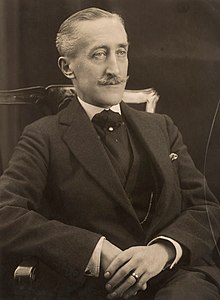
George Joachim Goschen, 2nd Viscount Goschen, by Paul Laib, after  Sir Oswald Birley, (1927) - NPG D34642 - © estate of Mark Birley
Sir Norman Marjoribanks(acting)
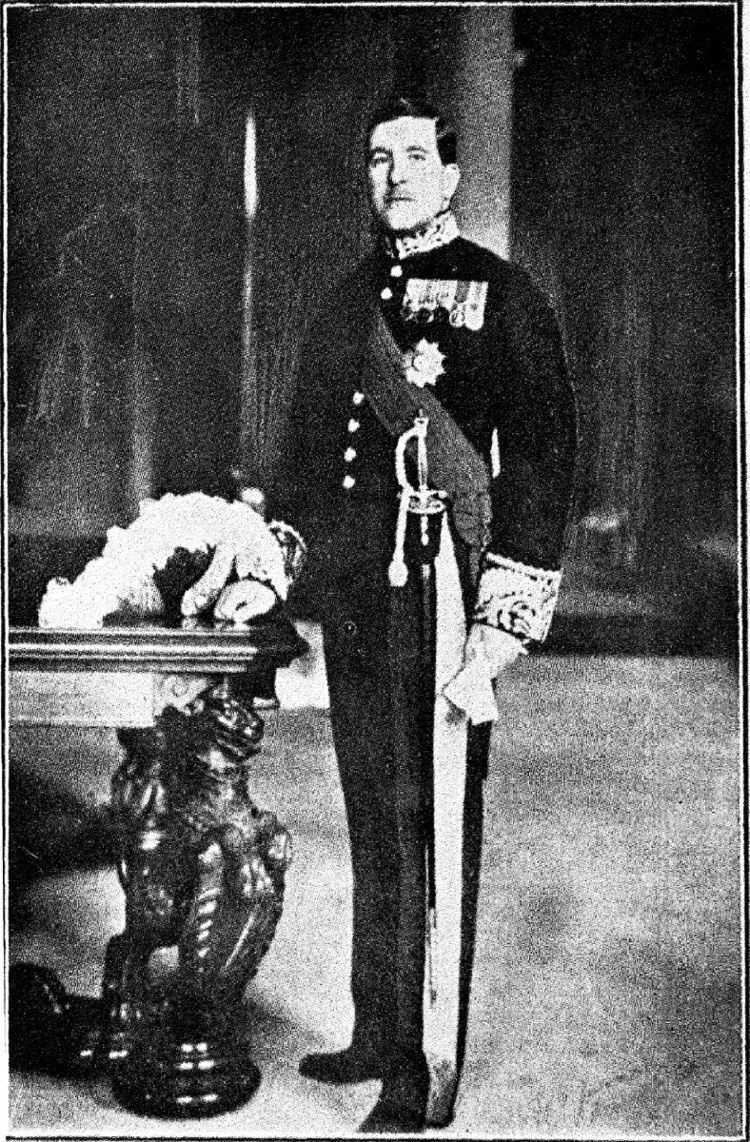
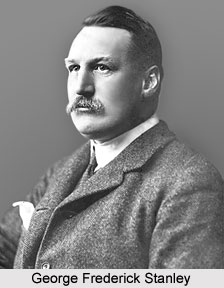
George Frederick Stanley, Governor of Madras Presidency


Click here for a video to the Prince of Wales's tour in 1922, that was during the Non-Cooperation movement, and part of the reason why the Congress did not fight the 1920 elections

Tuesday, 23 July 2019

Elections to the Madras Presidency, pre-independence: Part 2 - The First Elections


Image result for madras presidency 1920
Madras Presidency at the time of the first elections


At the time of the first elections in 1920, there were only 2 major parties contesting: The Congress and the Justice Party. However, just months before the elections were due, the Congress called for the non-cooperation movement. The Congress in the Madras Presidency was dominated by those who wished to follow Gandhi's call, and so the few who wanted to contest elections were outvoted.

The Justice Party faced no real opposition in the 1920 elections, except some independents.


The Justice Party was formed in 1916, with a Non-Brahmin manifesto. Their aim was to promote the needs of non-Brahmins in the state, who formed the majority. The founders were all non-Brahmin, but mostly upper-class, Zamindars, Rajas, bankers. They came into the city in that decade and settled. Officially the Party was the South Indian Liberal Federation, but it was known by the name of its English publication, ‘Justice’. They also published Tamil and Telugu papers, Dravidan in Tamil and Andhra Prakasika in Telugu.

Despite the calls by Mahatma Gandhi for a boycott of the elections, only six had no candidate.

Not many speeches were made in the campaign but there was a lot of excitement and posters.
Voting was low overall, not more than 25% of the 3% eligible to vote. In Madras city, it was almost 58%. High polling came from Mylapore, of 75%! Compare that with this years, when it was the lowest in the state. The four elected from Madras city were, Pitty Thiagaraya Chetty, President of the Justice Party, CP Ramaswamy Iyer, an eminent lawyer and who would be appointed to the Governors council as Advocate General, Dr U Rama Rao, an independent and who would later be a prominent Congress member, and O Thanikachallam Chetty, earlier a Justice Corporation official in Madras city. T Rangachari, a Congress supporter, was elected to the Centre from Madras city. 


After the results of the elections, Thyagaraya Chetty was asked to be the First Minister, and form a coalition ministry with the nationalists. But he refused. 
The first First Minister(as the Chief Minister was referred to in those days) was A Subbarayulu Reddiar, a landowner and businessman from South Arcot. However, he resigned very soon due to ill health and he was replaced by the Raja of Panagal. Thiagaraya Chetty resigned, as he was more concerned with local administration than with the Province as a whole. 
There were 3 Indian ministers who were chosen, alongside the Raja of Panagal.  A Subbarayulu Reddiar, (who was replaced by Panagal, whose position was taken by A P Patro, a lawyer and landholder from Vizag) and K V Reddy Naidu, a landholder from Nellore. (a later Governor and Chief Minister of Madras Presidency). They were appointed by Wellingdon, who was the Governor of Madras at that point. 

Elections were simultaneously held to the central houses as well. 
Local elections were also held, but over time, these became more and more influenced by Justice Party elects, as they used their positions to influence who would be chosen, or simply to annul elections and nominate a relative or chosen favourite. 

One of the first major policies the Justice Party-led legislature passed was giving women the vote. Initially, women were not allowed to vote, but the Women’s India Association had been representations to the Government of India for a while. The Government decided to put it to a vote, and initially Madras and Bombay voted, in 1921. After a few hours of discussion, Madras cleared the bill, and women were given the right to vote, with 40 members for, and 10 against, among the 90 present. And so Madras became the first state in India to give women the right to vote, just a year after the US. 

The 1923 elections would give the Justice Party some opposition in the form of the Swaraj party, and also give rise to the first no-confidence motion in India. 


(to be continued)

Freeman Freeman-Thomas by Henry Walter Barnett.jpg
Freeman Freeman-Thomas, Marquess of Willingdon, Governor of Madras
(image:wiki)

Monday, 22 July 2019

Elections to the Madras Presidency, pre-independence: Part 1 - Background

This was originally a talk I gave to the Rotary Club of Madras East (my first) in July 2019. Due to the lack of information on this subject, I decided I would make it into a blogpost.


In 1920, India voted for the first time. Though 1952 was the first elections in independent India, Indians first began to vote in 1920.

In the early 20th century, some elections were held for the Central Legislature for the first time. By the Morley Minto reforms of 1909, there were indirect elections by the Provinces and an Indian was introduced Into the Viceroys executive council. But ordinary citizens still did not have the vote.

But then India was involved in World War I.  A lot of Indians were involved in the war, and  many of them died as well, in foreign lands. The Congress supported the British. Unfortunately, the British did not acknowledge India’s contribution in the war, which had drawn heavily on India. After various Indians, and groups, like the Congress, demanded to know the British stance on India during the war, the British released the August 17, 1917 declaration: they stated that they were moving to a responsible government within the British empire.

The introduction of elections was due to the Montagu Chelmsford reforms of 1919, also known as the Government of India Act, 1919. The Act of 1909 had attempted this to a much smaller degree but failed.  These reforms brought in dyarchy, a system of governance, where some matters were reserved subjects, like finance, and others were given to Indian ministries, or transferred subjects. This was seen by the British as a way by which Indians could be brought into the administration, but without the British themselves losing control of important matters, as money was still with the British. At the same time, some subjects would be dealt with by the Centre, and others by the Provinces.

 According to the reforms, all those paying income tax above a certain bracket, and  owning land were entitled to vote. This restricted the electorate to 1 in 250, or around 3% of the population, but it was still a change that had occurred. The Governor remained the head of each Province and the Viceroy the head of the nation, all under the King-Emperor.

Each district was like a constituency in itself, but each voted in 2 or 3 people to the Council. The voters had as many votes as the members being sent to the Council. At the same time, there were two houses in the Centre, the Legislative Assembly, with 104 elected seats, had a 3 year tenure and the Council of State, 34 members with a 5 year tenure. Women could not be elected to the Council.   Madras had 5 seats in the Council, of which one was reserved for Muslims, and in the Legislative Assembly, 16, of which 2 were commerce seats and one was from the city of Madras.
Parliament was declared open by the Duke of Connaught and Strathearn, (Prince Albert, the Seventh Child of Queen Victoria) on Feb 9 1921 and laid the foundation stone for the new Parliament building in Delhi three days later. He had the previous year already declared the Madras Provincial Council open.


The Provincial Legislative Council was the body dealing with the Province. Until 1935, there was only one house for all the Provinces. From the 1937 elections, elections were also held for a Legislative Assembly, while the Council became an upper house. The Upper house qualified only 17000 men across the whole of the British provinces to vote them in!
The considerations to be a voter:
  • Voters should have paid land revenue of Rs.3000 or have property with rental value or have taxable income.
  • They should possess previous experience in the legislative council.
  • They should be members of a university senate.
  • They should hold certain offices in the local bodies.
  • They should hold some specific titles.


The Legislative Council in Madras had 134 members, of whom 98 were elected, and the remaining 29 were nominated. Of these 98, there was communal and constituent voting. Madras city voted in 4 members. The non-general seats included: 13 Muslims, 5 Christians, 6 landowners, 1 European, 1 planter, 5 Commerce seats, and 1 University seat that people were elected from. 


However, the Act was applicable only till 1929, and one of the clauses was that a committee would be appointed to look into its workings. 

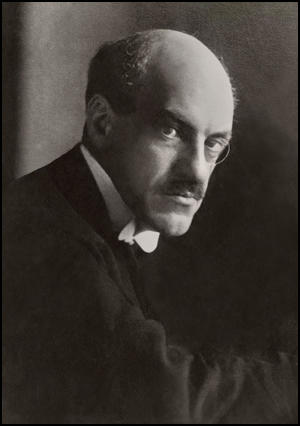
H. H. Asquith and Venetia Stanley in 1910Chelmsford Governor.jpg

Duke of Connaught and Stratheam in 1937. (in this video from 1921, he can be seen with Madras Governor Willingdon, 3:05-3:13, perhaps when in Madras?)

(to be continued) 


Wednesday, 10 July 2019

No 467, NM Joshi Marg: The Sassoon Graveyard

The graveyard with the railway at the back


Sassoon. You would have at least heard the name if you've been to Mumbai. Even if you haven't, the Sassoon docks would ring a bell.

So who is this Sassoon, after whom places in Mumbai are named, you may wonder. And whats the graveyard connect?

David Sassoon was an Iraqi Jew in Baghdad, who, after a falling out with the Ottoman governor of Iraq, moved to Persia. Starting a trading business from the bottom up, he set up a business empire and banking corporation from Shanghai to London. He had eight sons, each of whom went into one line of business or the other.


Bombay was one of their headquarters. David Sassoon was a naturalised British citizen, despite never having visited the island, and leader of Bombay's Baghdadi Jewish community. In Bombay lived a few members of the family, who handled business, including the second son, Elias David Sassoon.

Elias's son Jacob, while in Shanghai, died in 1868. As a way of remembrance, Elias set aside a plot of land, now by the railway line, as a Jewish cemetery in 1878. This is mentioned on a plaque by the gate.  Buried here are many Sassoons, all the way up to the 1996 as far as we could see.

The plaque at the entrance


As you pass the Central Jail, and turn at the circle, this little plot does not stand out. However, if you look over the compound wall, you will see the tops of a couple of tombs. Approaching the gate, which is locked, we passed through via a smaller opening in the gate.

The gate

The whole area is peaceful. The caretaker asks a couple of questions, but once he is satisfied, he is happy enough to take you around and show you personally. The whole area is green at the edges, and around the big tombs, with neat rows of graves laid out. Occasionally, you see a train slowly coming in to the station, and hear its horn. But besides that, birds and your voices are the only noises in the cemetery.


Right in the centre are three massive structures. Two of them hold Sir Jacob Sassoon, and his wife, Lady Rachel, while the other is for Sir Albert Sassoon. Both Sassoons are sons of David, and Albert in fact set up the Sassoon docks, Mumbai's wet docks, to export cotton, in 1875.

A confluence of old and new, with a hint of green - a symbol of what the city is

Jacob Sassoon's grave

Lady Rachels grave


Albert Sassoon's grave

Sir Jacob is likely the man who set up the synagogue in Kala Ghoda, (a place now of high security, where you need to submit a copy of your ID and show the original before you are let in) behind Rhythm house.

The tombs of Sir Jacob and Lady Rachel

The inner dome of the tomb

Now what were the Sassoons doing in China, and Hong Kong, which is where Joesph died? They traded - I came across this article that answered my question - Opium. Starting in textiles, they made their money in the opium trade. Opium was where the money was, and China was importing a lot of it at the end of the 19th century. They also branched into cotton, silk, wool,  banking, edible commodities, trade of precious commodities, among their various activities and did some philanthropy as well. They were in almost all spheres of life.

This cemetery is one of many where Jews are buried in Bombay, but the Jews here are Baghdadi and Bene Israeli(the Bene Israeli Jews married Bagdadi Jews and integrated). A prominent Bene Israeli Jew here is the poet Nissim Ezekiel, whose grave unfortunately we were unable to see, and that I found out about only after the visit.

A memorial to Elias David Sassoon


This cemetery is also special, because it commemorates some of those who died due to Nazi persecution in Europe, who had a Bombay connect. A large wall by the entrance has names, and the cities or concentration camps they died in, etched. Around and below that, other prominent Jewish names from Bollywood are remembered.Read more about the wall here


Oddly enough, of late, many Jews from Israel have been coming to this cemetery to identify long-dead relatives and force them to move back in with them! The bodies are taken to Israel and reburied.

David Sassoon and all his children left a huge mark on Bombay and the world. He himself died in Poona, in 1864 and is buried there.

A place of peace and tranquility, the Jewish cemetery in Chinchpokli should be on every history enthusiasts places to visit, especially if they are looking at the history of Bombay city.

Jewish cemetery, Chinchpokli


Sunday, 30 June 2019

TELC Jubilee church, Kodaikanal


Nowadays, Kodaikanal is a busy tourist town, filled with shops selling homemade chocolates(you will never know who's home though) and oil. The climate attracts people, as well as the views. However, a hundred years ago, Kodiakanal was, apart from being a British retreat, a missionary's outpost.

In the suburbs of Kodaikanal are two areas, near each other, known as German settlement, and Swedish settlement. Neither has either Germans or Swedes, but the name remains. The areas have been sold, one to a school, and the other developed. Of the settlements, a simple Google search throws up nothing.  Of the church, not much.

The Germans in the German Settlement built a church commemorating 200 years of the oldest church in Tranquebar.(in 1707.) This church, built in 1906, was known as the Jubilee church.

The plaque on the wall

Climbing up the long slope from the metal gate, you enter the small door at the back of the church. The church inside is smaller than you would expect.On either end of the structure, are two small, stained glass windows, right on top. There are a few rows of benches, thick walls, with nothing on them, and the pulpit. The wood used for the cross is supposed to have come from Jerusalem.


The architecture inside is unchanged from when they built it. Service is still conducted on Sundays we were told. Service used to be held in 4 languages, until about 25 years ago: English, German, Swedish and Tamil. However, nowadays it is only in Tamil. 

Inside of the church


Outside, the heavy bell dates back to 1923, and is inscribed with a verse from the Bible. The bell is rung three times on Sunday mornings to alert people that mass is going to begin. It bears a legend 'Kodaikanal, 1923'. The structure it sits on was rebuilt in 1981 to celebrate 50 years of the church. The plaque sits inside the structure. 

Bell tower


At the back, are two unmarked graves. We were told that there were the ones who initiated the building of the Church, and that in their (German) custom, graves do not usually have names.


From 10:30 to 6 on Fridays, the church is open to visitors, so do have a look if you are in Kodi, at this unique little church. For location, click here