Pages

Pages

Showing posts with label 1920. Show all posts

Tuesday, 23 July 2019

Elections to the Madras Presidency, pre-independence: Part 2 - The First Elections


Image result for madras presidency 1920
Madras Presidency at the time of the first elections


At the time of the first elections in 1920, there were only 2 major parties contesting: The Congress and the Justice Party. However, just months before the elections were due, the Congress called for the non-cooperation movement. The Congress in the Madras Presidency was dominated by those who wished to follow Gandhi's call, and so the few who wanted to contest elections were outvoted.

The Justice Party faced no real opposition in the 1920 elections, except some independents.


The Justice Party was formed in 1916, with a Non-Brahmin manifesto. Their aim was to promote the needs of non-Brahmins in the state, who formed the majority. The founders were all non-Brahmin, but mostly upper-class, Zamindars, Rajas, bankers. They came into the city in that decade and settled. Officially the Party was the South Indian Liberal Federation, but it was known by the name of its English publication, ‘Justice’. They also published Tamil and Telugu papers, Dravidan in Tamil and Andhra Prakasika in Telugu.

Despite the calls by Mahatma Gandhi for a boycott of the elections, only six had no candidate.

Not many speeches were made in the campaign but there was a lot of excitement and posters.
Voting was low overall, not more than 25% of the 3% eligible to vote. In Madras city, it was almost 58%. High polling came from Mylapore, of 75%! Compare that with this years, when it was the lowest in the state. The four elected from Madras city were, Pitty Thiagaraya Chetty, President of the Justice Party, CP Ramaswamy Iyer, an eminent lawyer and who would be appointed to the Governors council as Advocate General, Dr U Rama Rao, an independent and who would later be a prominent Congress member, and O Thanikachallam Chetty, earlier a Justice Corporation official in Madras city. T Rangachari, a Congress supporter, was elected to the Centre from Madras city. 


After the results of the elections, Thyagaraya Chetty was asked to be the First Minister, and form a coalition ministry with the nationalists. But he refused. 
The first First Minister(as the Chief Minister was referred to in those days) was A Subbarayulu Reddiar, a landowner and businessman from South Arcot. However, he resigned very soon due to ill health and he was replaced by the Raja of Panagal. Thiagaraya Chetty resigned, as he was more concerned with local administration than with the Province as a whole. 
There were 3 Indian ministers who were chosen, alongside the Raja of Panagal.  A Subbarayulu Reddiar, (who was replaced by Panagal, whose position was taken by A P Patro, a lawyer and landholder from Vizag) and K V Reddy Naidu, a landholder from Nellore. (a later Governor and Chief Minister of Madras Presidency). They were appointed by Wellingdon, who was the Governor of Madras at that point. 

Elections were simultaneously held to the central houses as well. 
Local elections were also held, but over time, these became more and more influenced by Justice Party elects, as they used their positions to influence who would be chosen, or simply to annul elections and nominate a relative or chosen favourite. 

One of the first major policies the Justice Party-led legislature passed was giving women the vote. Initially, women were not allowed to vote, but the Women’s India Association had been representations to the Government of India for a while. The Government decided to put it to a vote, and initially Madras and Bombay voted, in 1921. After a few hours of discussion, Madras cleared the bill, and women were given the right to vote, with 40 members for, and 10 against, among the 90 present. And so Madras became the first state in India to give women the right to vote, just a year after the US. 

The 1923 elections would give the Justice Party some opposition in the form of the Swaraj party, and also give rise to the first no-confidence motion in India. 


(to be continued)
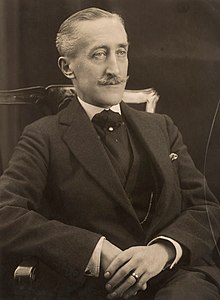
Freeman Freeman-Thomas by Henry Walter Barnett.jpg
Freeman Freeman-Thomas, Marquess of Willingdon, Governor of Madras
(image:wiki)

Monday, 22 July 2019

Elections to the Madras Presidency, pre-independence: Part 1 - Background

This was originally a talk I gave to the Rotary Club of Madras East (my first) in July 2019. Due to the lack of information on this subject, I decided I would make it into a blogpost.


In 1920, India voted for the first time. Though 1952 was the first elections in independent India, Indians first began to vote in 1920.

In the early 20th century, some elections were held for the Central Legislature for the first time. By the Morley Minto reforms of 1909, there were indirect elections by the Provinces and an Indian was introduced Into the Viceroys executive council. But ordinary citizens still did not have the vote.

But then India was involved in World War I.  A lot of Indians were involved in the war, and  many of them died as well, in foreign lands. The Congress supported the British. Unfortunately, the British did not acknowledge India’s contribution in the war, which had drawn heavily on India. After various Indians, and groups, like the Congress, demanded to know the British stance on India during the war, the British released the August 17, 1917 declaration: they stated that they were moving to a responsible government within the British empire.

The introduction of elections was due to the Montagu Chelmsford reforms of 1919, also known as the Government of India Act, 1919. The Act of 1909 had attempted this to a much smaller degree but failed.  These reforms brought in dyarchy, a system of governance, where some matters were reserved subjects, like finance, and others were given to Indian ministries, or transferred subjects. This was seen by the British as a way by which Indians could be brought into the administration, but without the British themselves losing control of important matters, as money was still with the British. At the same time, some subjects would be dealt with by the Centre, and others by the Provinces.

 According to the reforms, all those paying income tax above a certain bracket, and  owning land were entitled to vote. This restricted the electorate to 1 in 250, or around 3% of the population, but it was still a change that had occurred. The Governor remained the head of each Province and the Viceroy the head of the nation, all under the King-Emperor.

Each district was like a constituency in itself, but each voted in 2 or 3 people to the Council. The voters had as many votes as the members being sent to the Council. At the same time, there were two houses in the Centre, the Legislative Assembly, with 104 elected seats, had a 3 year tenure and the Council of State, 34 members with a 5 year tenure. Women could not be elected to the Council.   Madras had 5 seats in the Council, of which one was reserved for Muslims, and in the Legislative Assembly, 16, of which 2 were commerce seats and one was from the city of Madras.
Parliament was declared open by the Duke of Connaught and Strathearn, (Prince Albert, the Seventh Child of Queen Victoria) on Feb 9 1921 and laid the foundation stone for the new Parliament building in Delhi three days later. He had the previous year already declared the Madras Provincial Council open.


The Provincial Legislative Council was the body dealing with the Province. Until 1935, there was only one house for all the Provinces. From the 1937 elections, elections were also held for a Legislative Assembly, while the Council became an upper house. The Upper house qualified only 17000 men across the whole of the British provinces to vote them in!
The considerations to be a voter:
  • Voters should have paid land revenue of Rs.3000 or have property with rental value or have taxable income.
  • They should possess previous experience in the legislative council.
  • They should be members of a university senate.
  • They should hold certain offices in the local bodies.
  • They should hold some specific titles.


The Legislative Council in Madras had 134 members, of whom 98 were elected, and the remaining 29 were nominated. Of these 98, there was communal and constituent voting. Madras city voted in 4 members. The non-general seats included: 13 Muslims, 5 Christians, 6 landowners, 1 European, 1 planter, 5 Commerce seats, and 1 University seat that people were elected from. 


However, the Act was applicable only till 1929, and one of the clauses was that a committee would be appointed to look into its workings. 

H. H. Asquith and Venetia Stanley in 1910Chelmsford Governor.jpg

Duke of Connaught and Stratheam in 1937. (in this video from 1921, he can be seen with Madras Governor Willingdon, 3:05-3:13, perhaps when in Madras?)

(to be continued) 


Saturday, 13 April 2019

Remembering Jallianwala Bagh on its Centenary


"When brother spills the blood of his brother and exults in his sin...when he tries to keep the bloodstains fresh on the soil as a memorial of his anger, then God in shame conceals it under his green grass and the sweet purity of his flowers." (Tagore, 1920)

The Jallianwala Bagh (wikipedia)

It has been 100 years. 87600 hours. 36500 days.  10 decades. One hundred years.  In that space of time, India has been governed by 4 monarchs of the British crown (not to mention the hundreds of Princely states with their own rulers),  21 Prime Ministers, 7 British and 14 Indian(15 depending on your count) and experienced multiple social, political, and economic upheavals; been split into multiple states;undergone revolutions of many kinds;and achieved independence; but the event that occurred a century ago was one that occurred within the framework of another movement, but shook the nation by the inhumane injustice it displayed; and it was not forgotten.

In 1914, a new leader entered the political field, M K Gandhi. This lawyer from South Africa began conducting a new type of resistance to British rule, Satyagraha, across the country that left an impact on the leadership. The British brought in the Rowlatt Act in 1919, that extended wartime measures. Protesting this blatant breach of an individuals rights, Gandhi organised a Satyagraha, the Anti-Rowlatt Satyagraha and the Indians supported it. Two men were deported in the ensuing Satyagraha. To protest this, a meeting was held, (though there was a rule on against public meetings). In Amritsar. In the Jallianwala Bagh.

We all know what happens next. Dyer. Jallianwala Bagh. The peaceful public meeting. The tanks. The firing on innocent human beings. And in the end, bodies everywhere.

An issue of Young India, published in 1924, but on the events of 1919-22. describes the Jallianwala Bagh, from a letter written by Gandhi to 'Navjivan', which paints a very clear picture of what it looked like then:
"The name Jallianwala Bagh is a misnomer. 'Jallian' is a surname, and the original owner of the place was a 'Jallian'. The 'Bagh' is today the joint property of about 40 partners. It is not a 'Bagh' or garden but a dunghill. It is hemmed in on all sides by the back walls of houses and people have made it a convenient place to throw house-refuse in from back window's. It is an open space with three trees and a tomb, and is accessible by a narrow lane. General Dyer used this lane to approach the Bagh. The people who were attending the meeting in the Bagh on the 13th April were thus penned up, and had no way of escape except at three or four places by jumping walls. Thousands escaped with their lives by jumping the walls on that fateful day. "
There are bulletholes that can still be seen on those back walls a century later.

The immediate result in Amritsar was that a curfew was brought in, and repressive measures put in place. Martial law was in place from April 15 to June 9 in Punjab. The nation was abuzz with news of the tragedy.
 There were around 20000 people in the Bagh, and "fifty soldiers fired 1600 rounds in 10 minutes". Dyer admits to this.
International media, especially in England, widely reported the incident. However, peoples reactions were mixed.
There was a trial with 4 British men and 4 Indians, headed by a Lord Hunter, which found him guilty. He was sent home and denied pension. Yet some in the House of Lords and many in the House of Commons approved his actions, and he was presented with a purse of 20000 pounds in England, and a sword, inscribed with 'saviour of the Punjab'.
When Gandhi visited the Punjab in October, the Governor accused him of being the cause of Aprils massacre!

The week of the massacre the following year was observed as National week, falling at the time of the Khilafat movement.


In the Young India Issue of August 1920, a meeting in Britain of the Labour party is reported, favouring the freedom struggles in South-East Asia.They condemned the actions in the Punjab and passed a motion to that effect.
Tagore in the same issue calls the massacre "a monstrous progeny of a monstrous wave which for four years had been defiling Gods world with fire and poison, physical and moral" and refers to these "orgies of triumphant powers" , but in the end, he implores people not to retaliate with violence.(Tagore was a strong critic of the massacre, having given up his knighthood in May 1919 in protest.)
In November 1920, they attempted to buy the Bagh, for the nation, at the cost of 5,36,000 in 6 instalments as a memorial. The Jallianwala Bagh National memorial Act was passed in 1951, which made it a national memorial for all.

The important thing about this attack is that it instigated the common Indian against colonial rule. The massacre was one of the most influential reasons for Gandhi to launch the Non-Cooperation movement the following year.

Is there more for us however, at this site? More than the memory of a fateful day? Perhaps, it tells us to remember, that sometimes, though we may face terrible circumstances, rulers who oppress, who deal lightly with massacres, not giving it the importance it needs, diverting blame, in the end we must remember, we have the power, collectively.

 The British government has been requested time and again to provide an apology for the incident. Today it has been one hundred years, but last week, the British PM, Theresa May, did say she "Deeply regret it".  But after so much time and begging is an apology now going to mean anything?


"To err is human and it must be held equally human to forgive....if we...would like...to be forgiven than punished. Nor does this mean that we may not ask for General Dyers dismissal. A lunatic cannot be kept in a position from which he can do harm to his neighbors"
MK Gandhi, 1920, Young India.